
Geared Motors
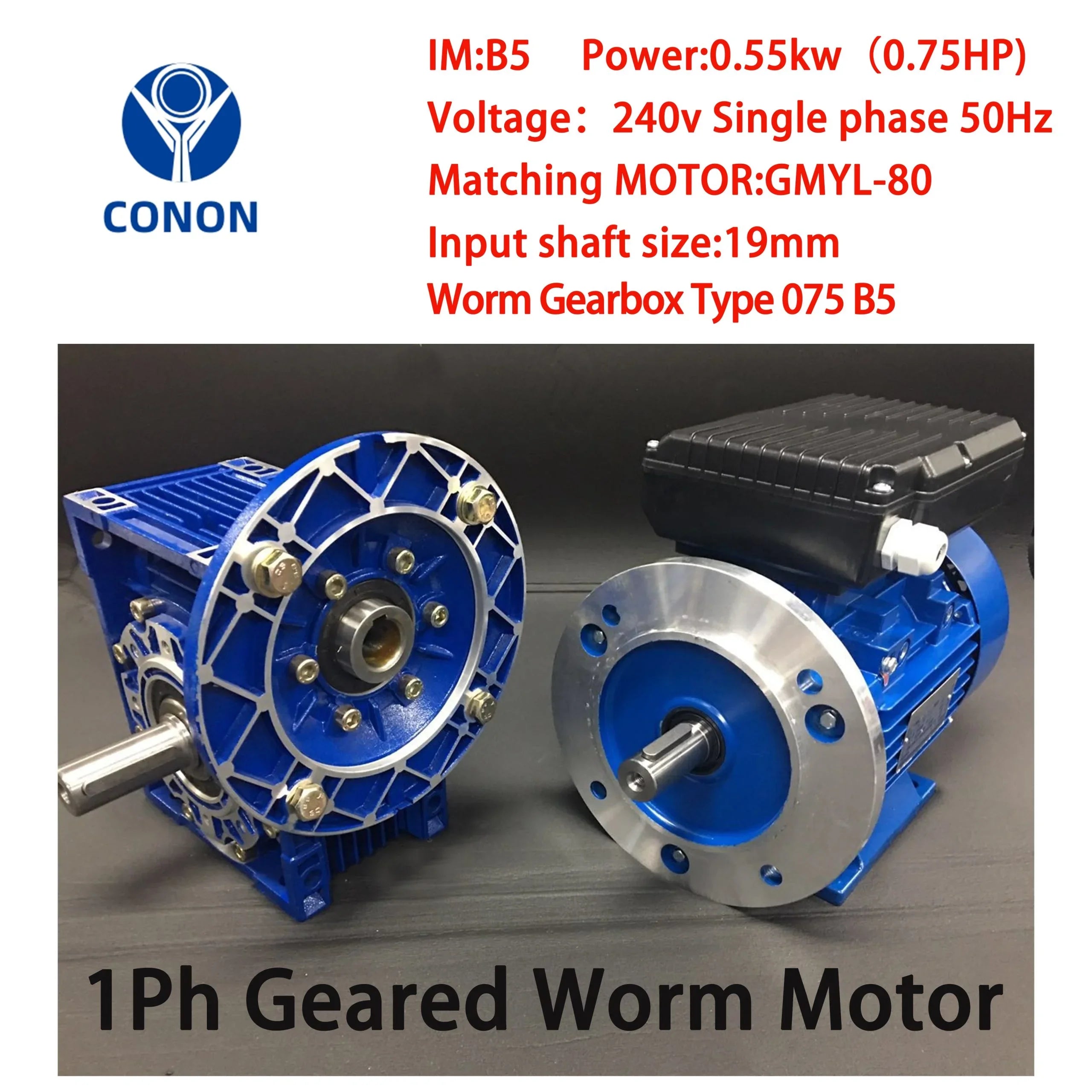
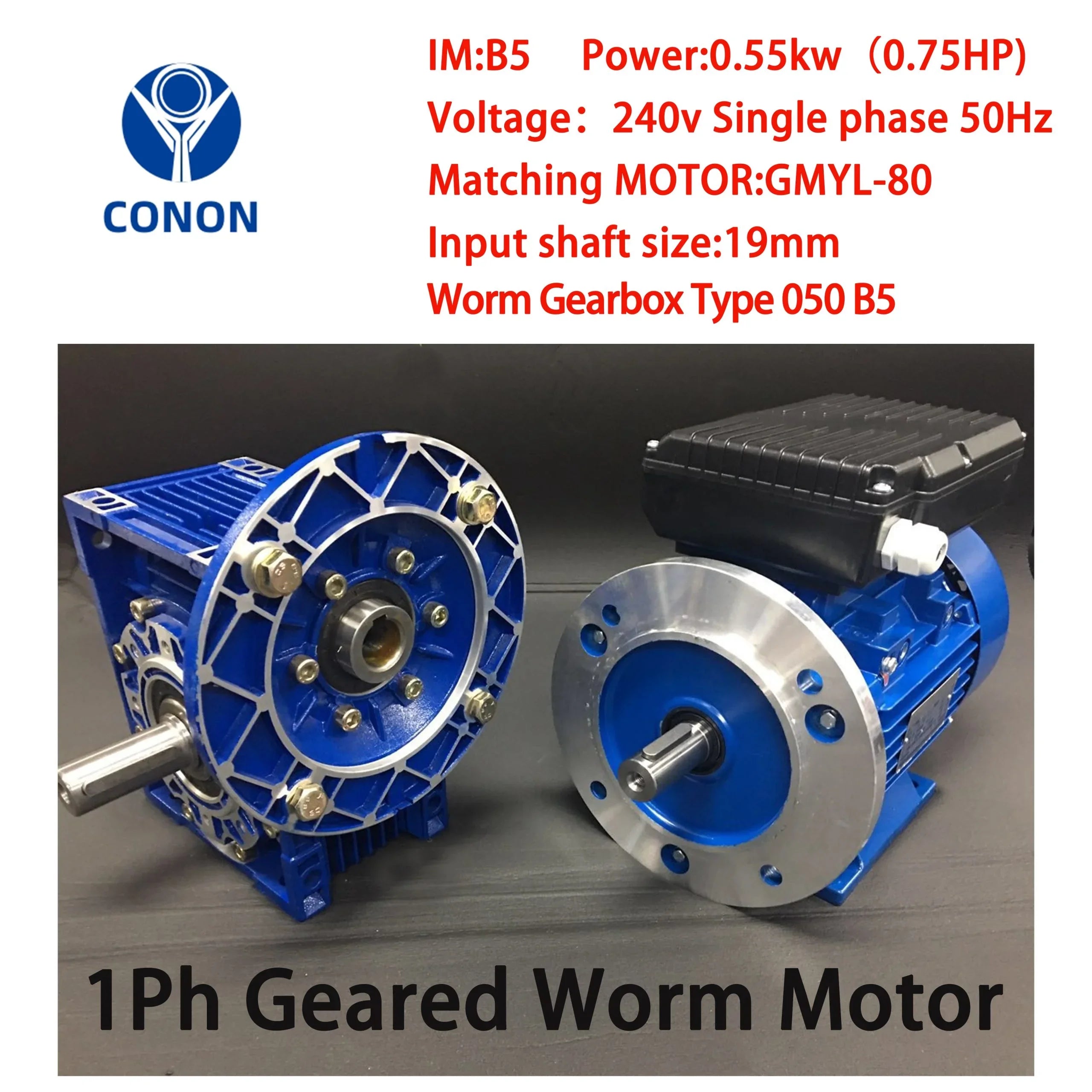
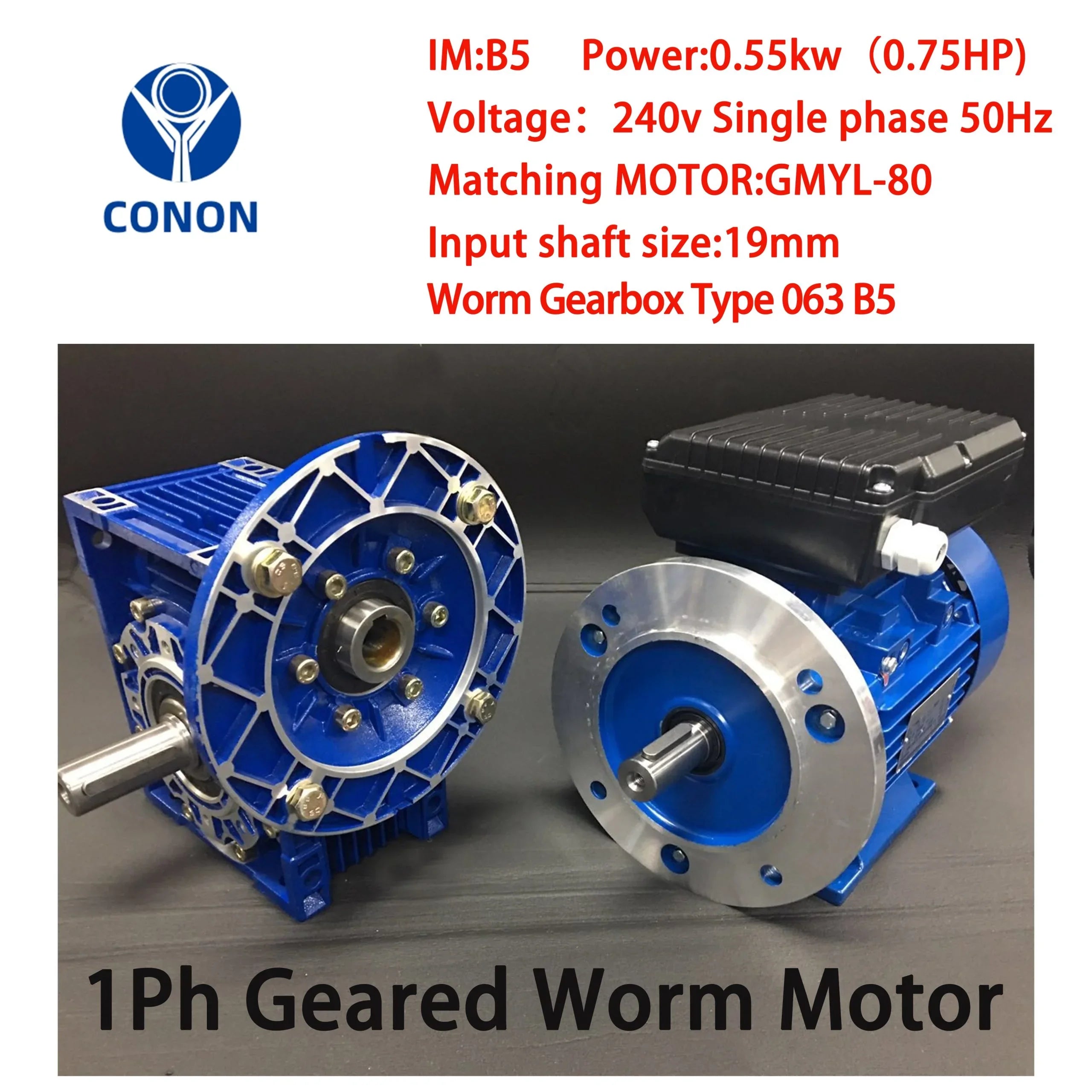
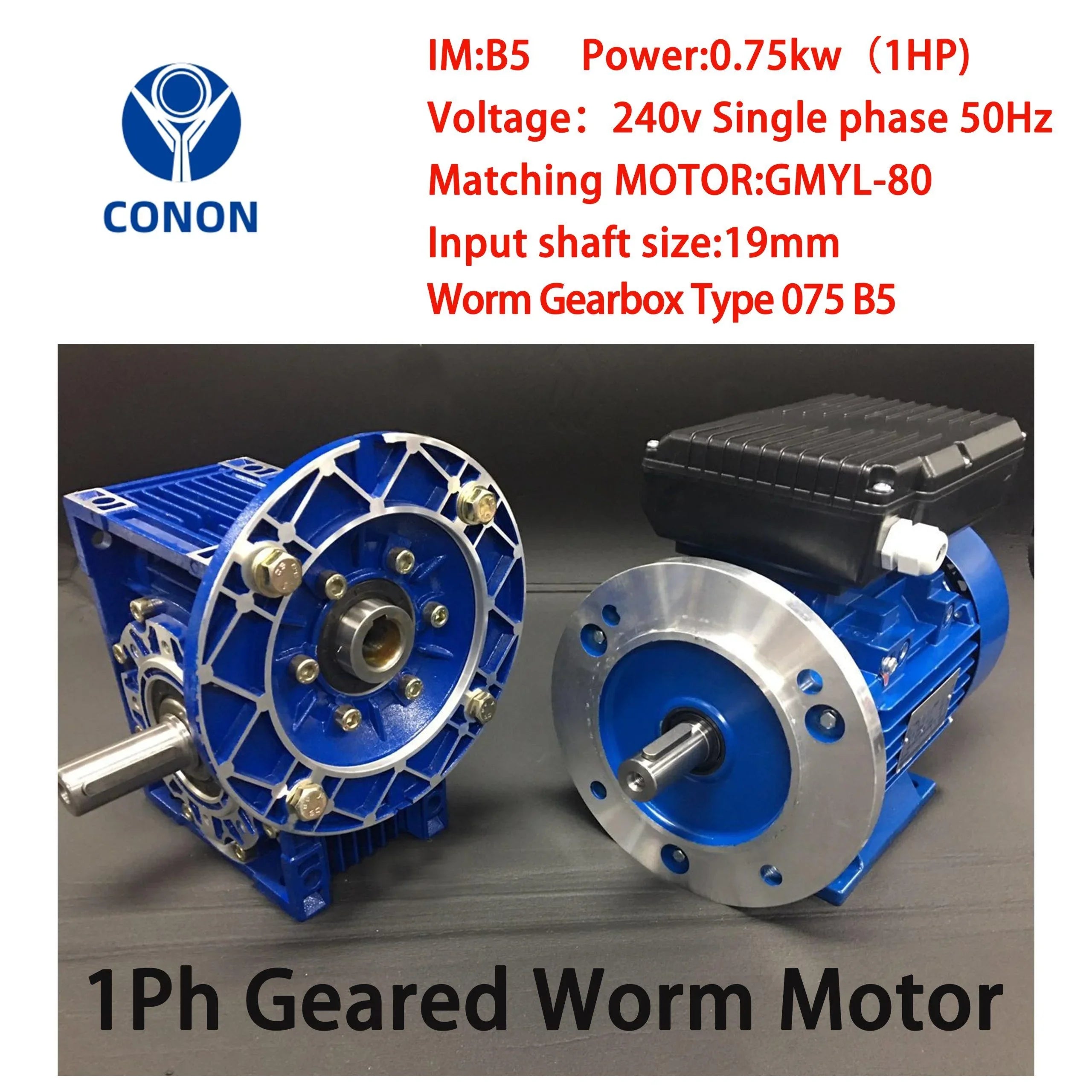
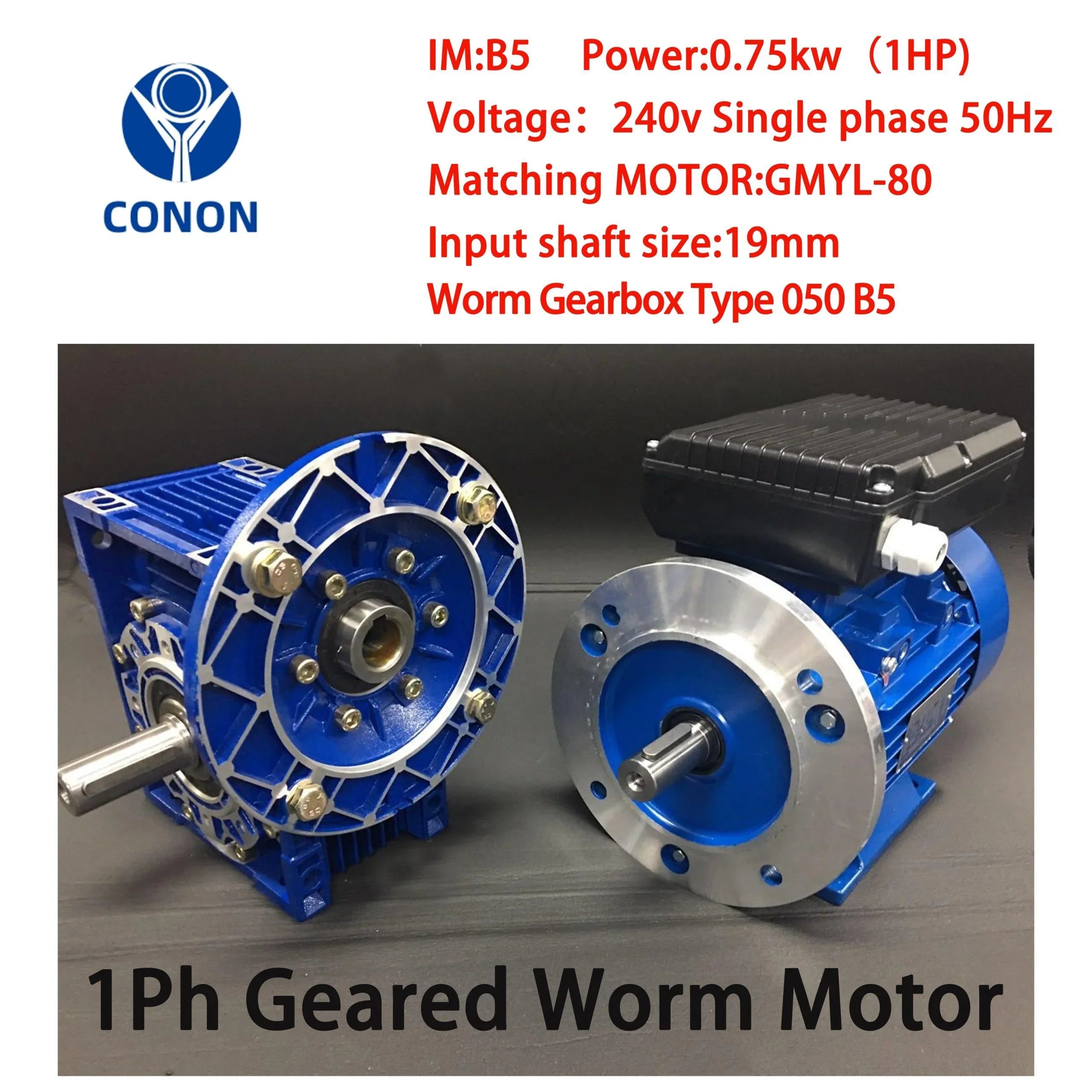
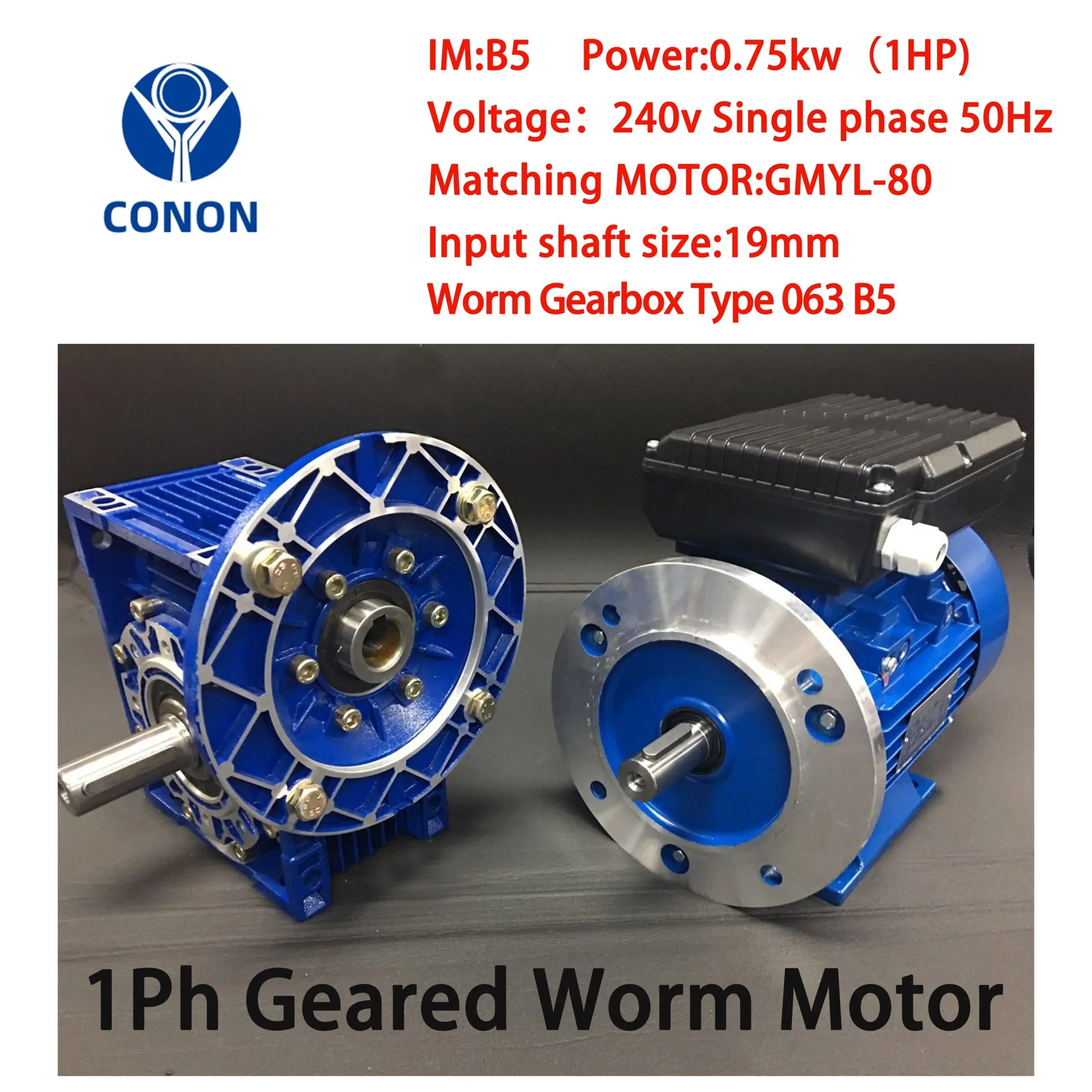
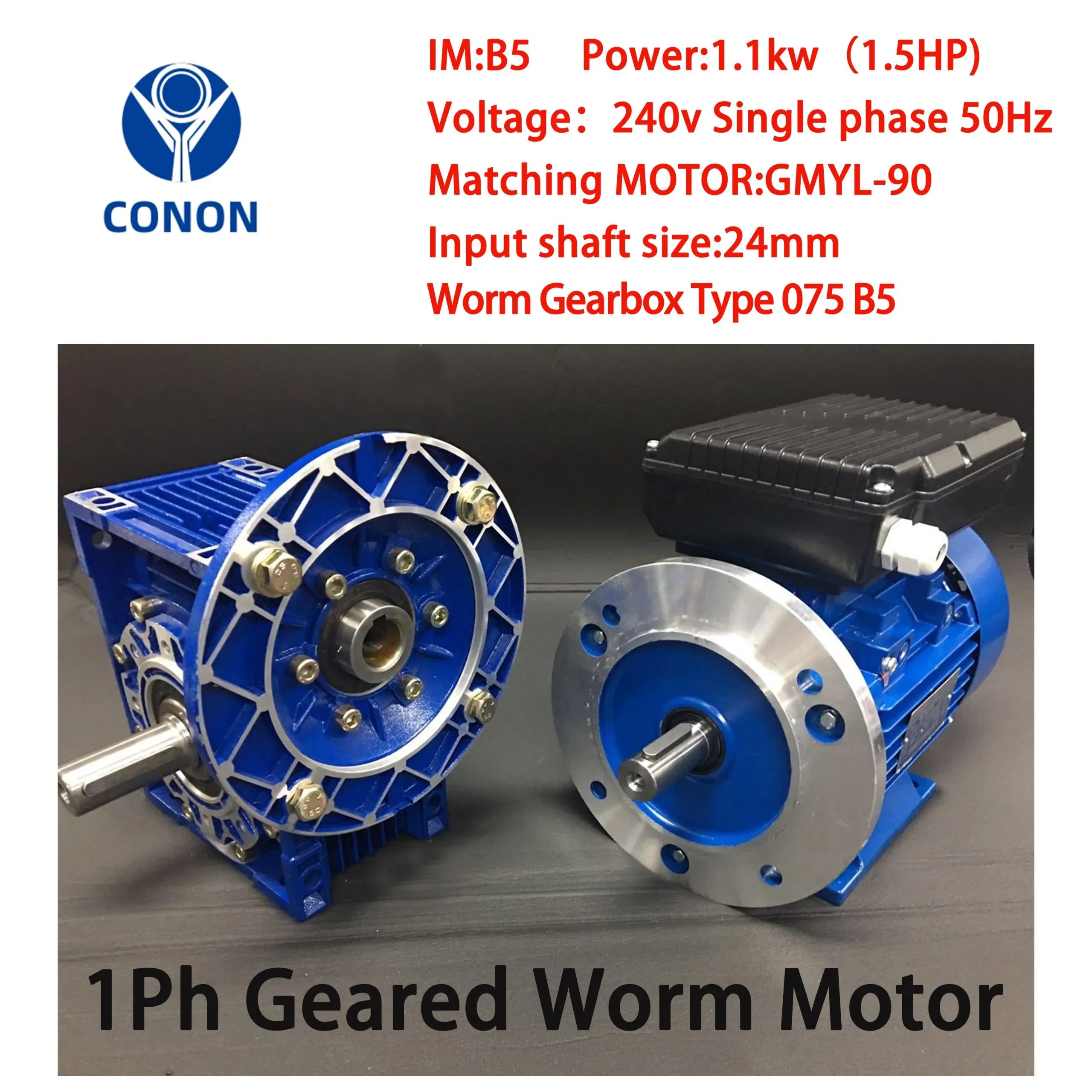
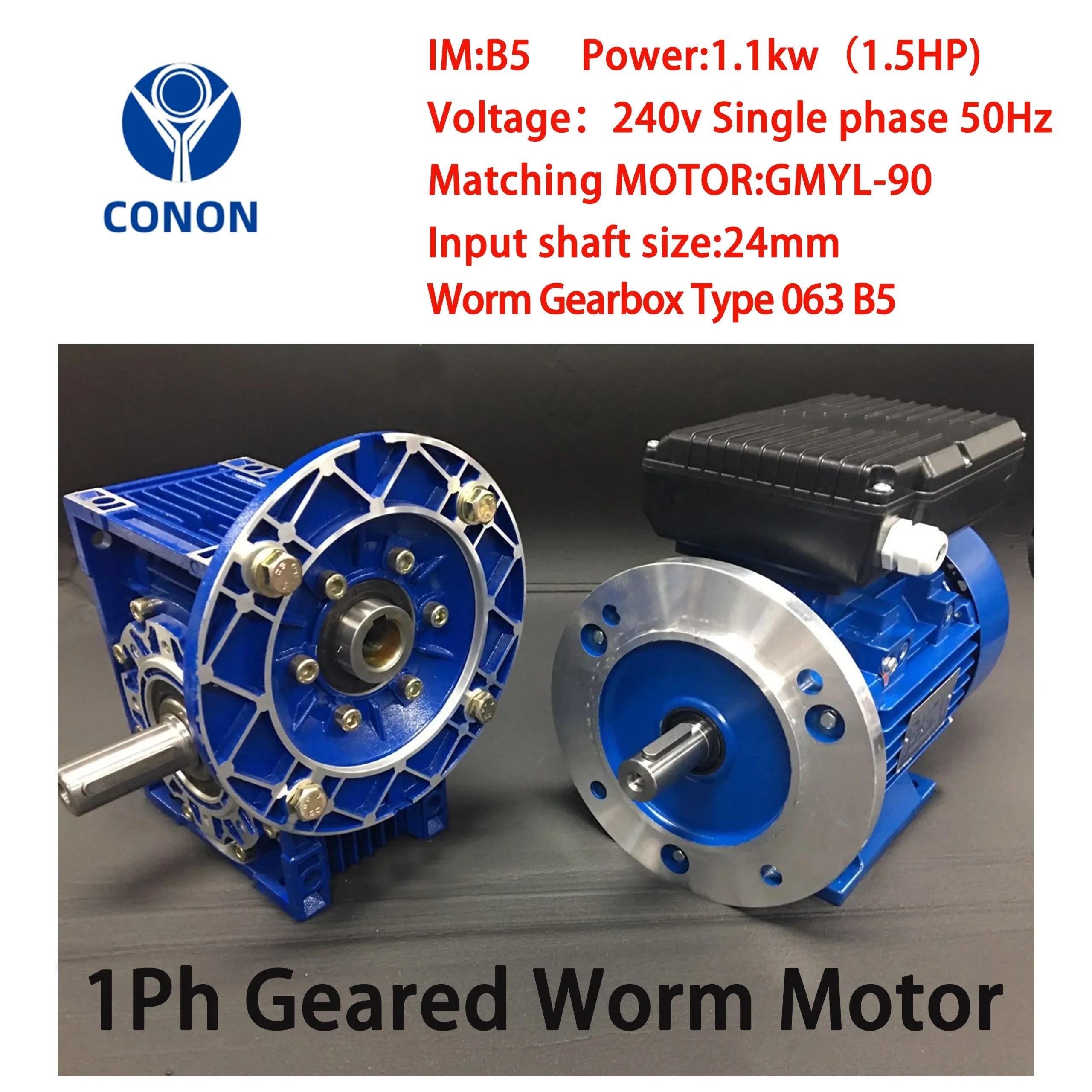
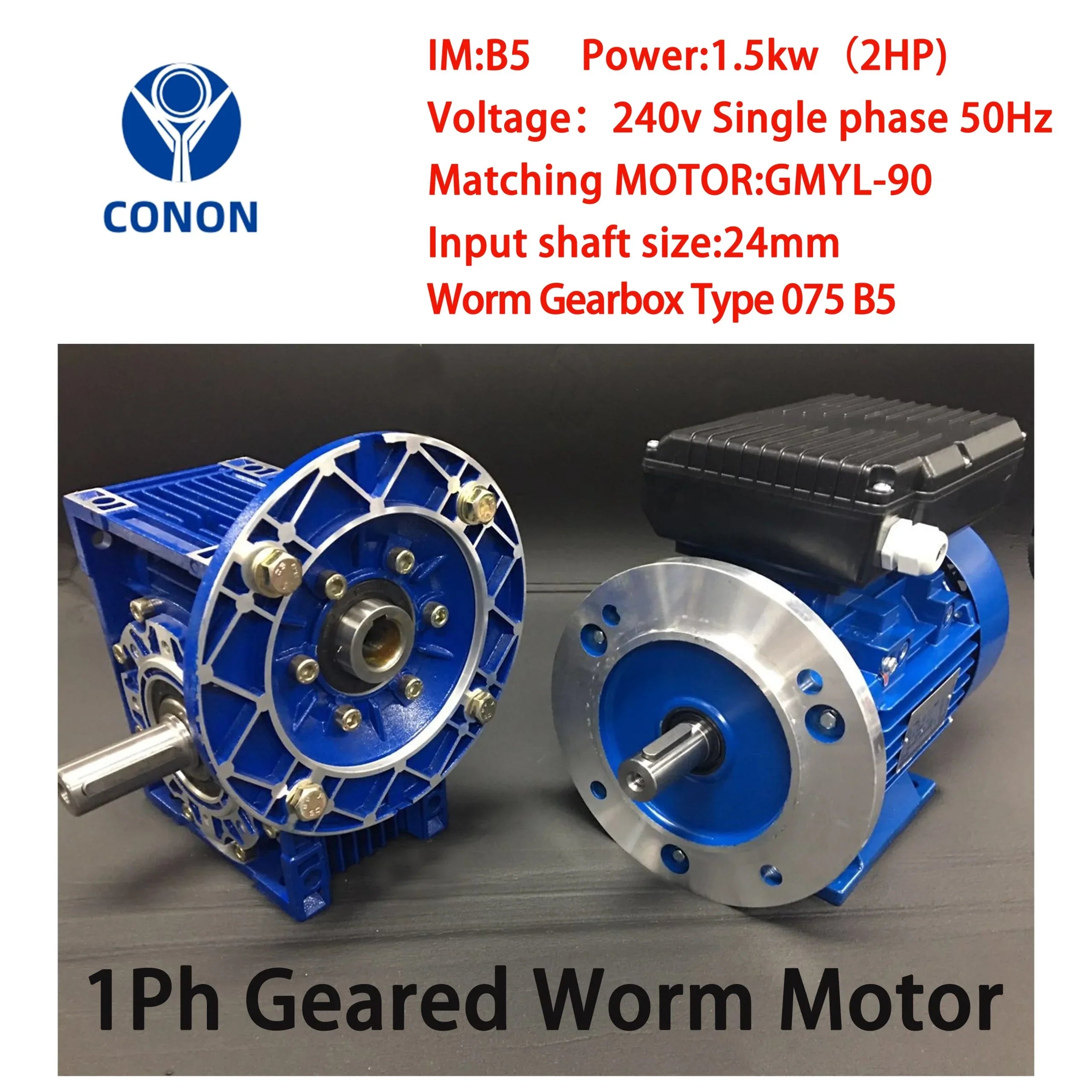
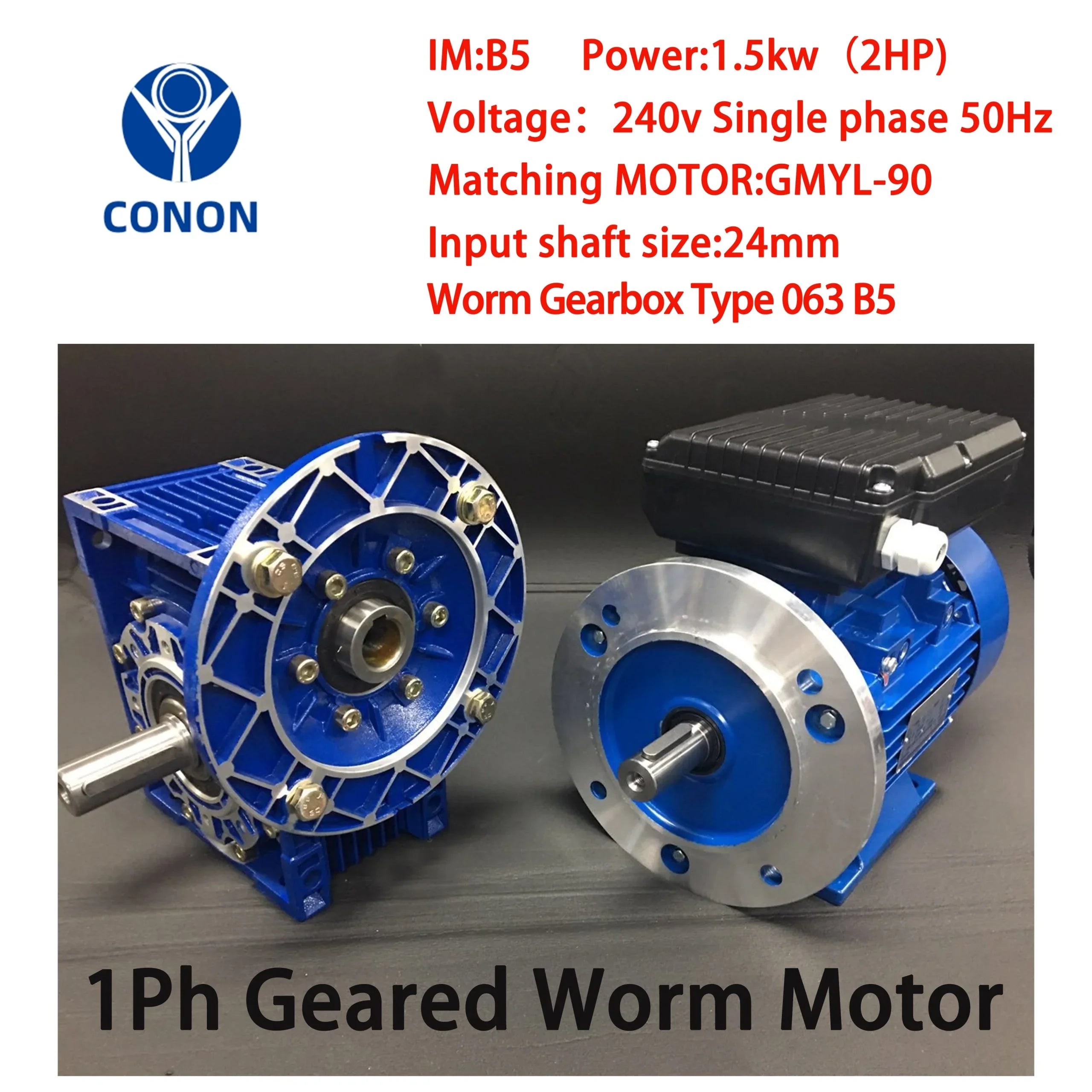
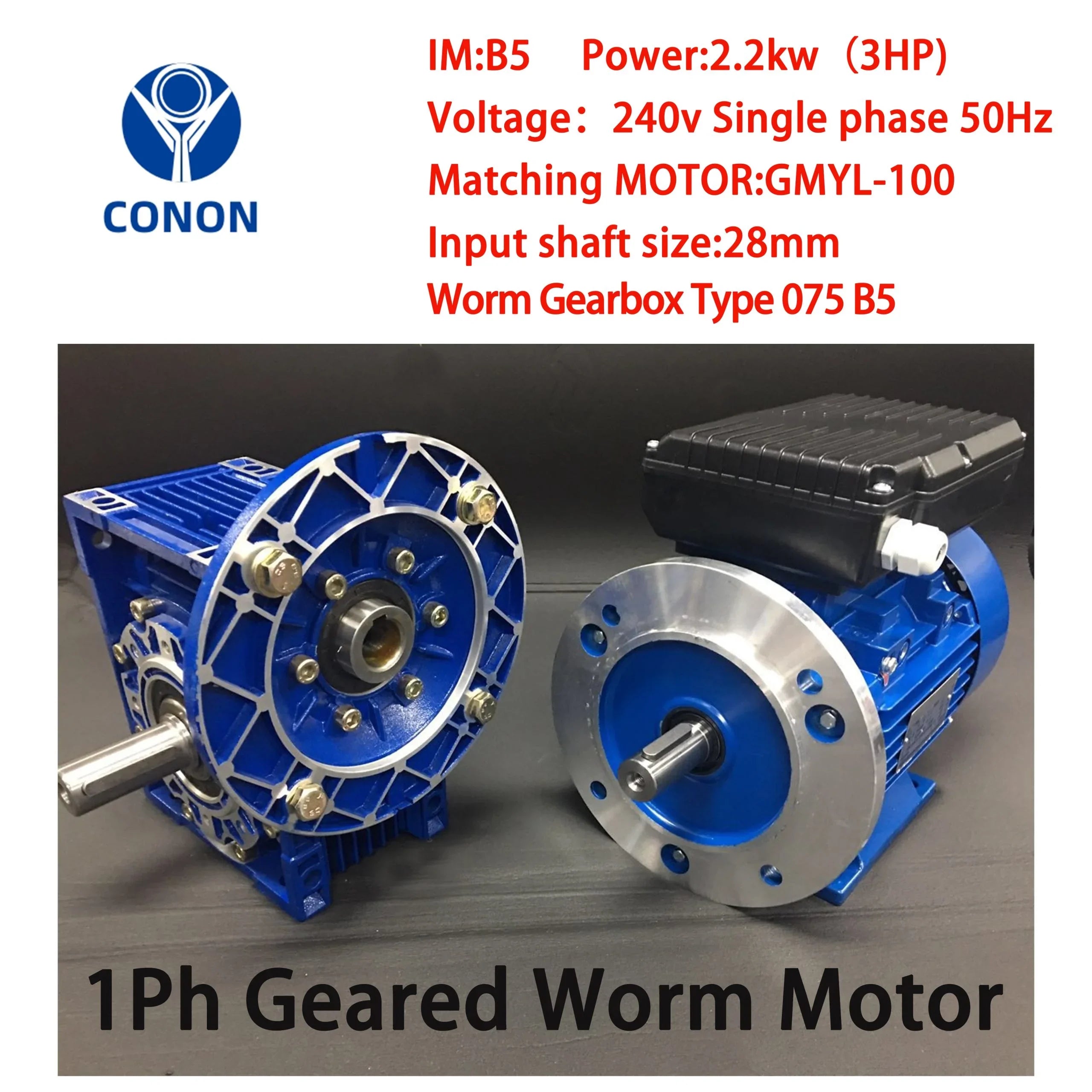
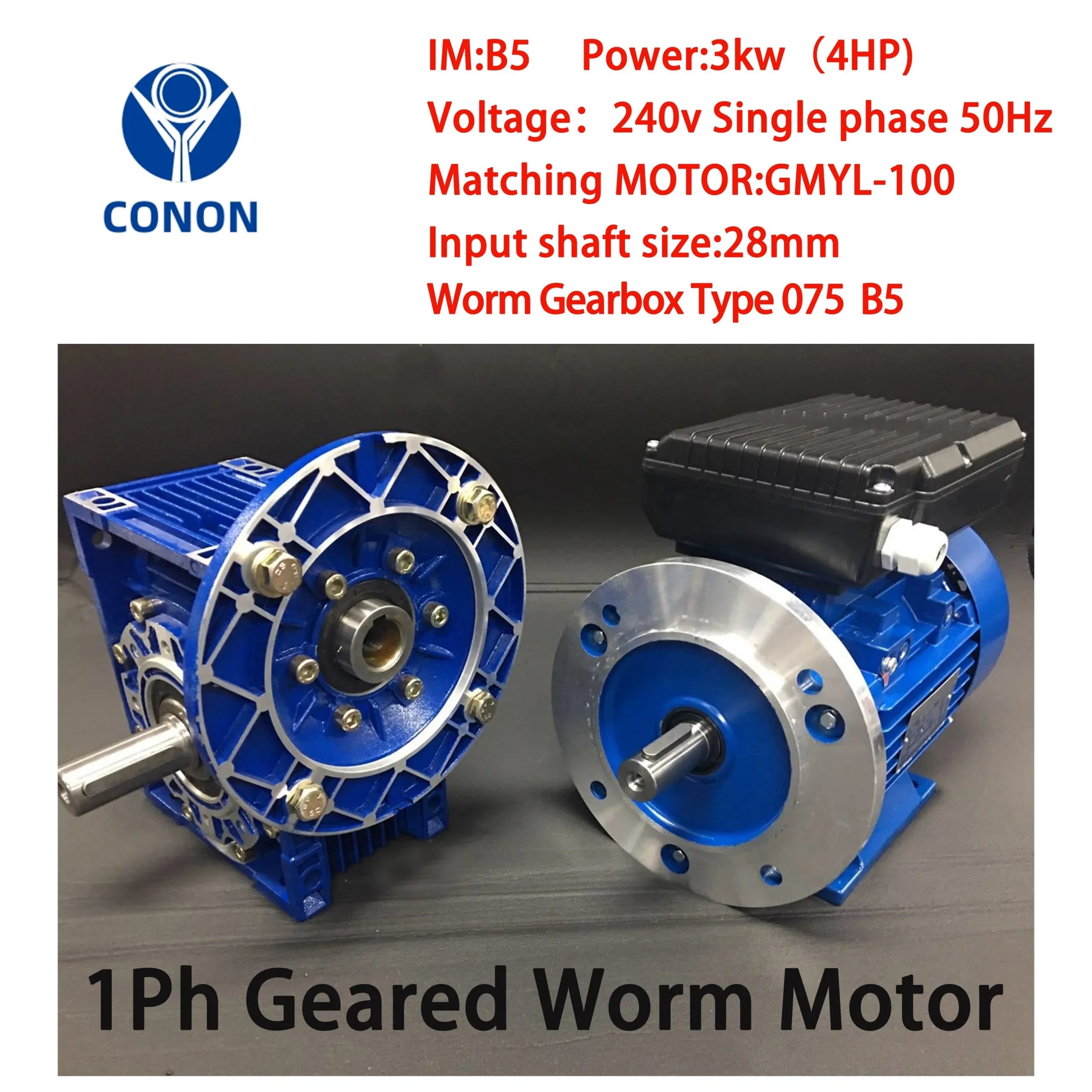
NMRV Frame Size and Shaft Specification
Frame size determines physical dimensions, torque capacity, and shaft sizes. Select the frame based on required output torque, then confirm the input shaft matches your motor shaft diameter.
| Frame | Housing | Input Shaft | Ratios Available | Typical Motor | Best For |
|---|---|---|---|---|---|
| NMRV030 | Aluminium | 11 mm | 10:1, 30:1 | 0.25–0.37 kW | Light conveyor, shutter drives, small agitators |
| NMRV040 | Aluminium | 14 mm | 10:1, 100:1 | 0.37–0.75 kW | Gate automation, light conveyor belt take-up |
| NMRV050 | Aluminium | 14 mm | 40:1, 100:1 | 0.75–2.2 kW | Cement mixers, conveyor drives, irrigation pumps |
| NMRV110 | Cast iron | 38 mm | 50:1 | 4–7.5 kW | Heavy conveyor, large agitator, mixer paddle |
| NMRV130 | Cast iron | 24 mm | 100:1 | 3–5.5 kW | Very slow output applications, winch drives |
B5 flange mount is standard on all HankeMotor NMRV units. If your motor has a B14 face (small square flange), an adaptor plate is required.
How to Calculate the Reduction Ratio You Need
The ratio = motor speed ÷ required output shaft speed. Australian motors run at either 1400 RPM (4-pole) or 2800 RPM (2-pole) at 50 Hz. Example: a 1400 RPM motor with a cement mixer drum requiring 35 RPM needs a 1400 ÷ 35 = 40:1 ratio (NMRV050 40:1 is the standard choice for this application).
| Ratio | Output (1400 RPM input) | Output (2800 RPM input) | Typical Application |
|---|---|---|---|
| 10:1 | 140 RPM | 280 RPM | Slower conveyor, light mixer |
| 20:1 | 70 RPM | 140 RPM | General purpose conveyor |
| 30:1 | 47 RPM | 93 RPM | Slow conveyor, light auger |
| 40:1 | 35 RPM | 70 RPM | Cement mixer drum, gate opener |
| 50:1 | 28 RPM | 56 RPM | Slow paddle mixer, winch |
| 100:1 | 14 RPM | 28 RPM | Very slow output, roll-up door drive |
Self-Locking at High Ratios — The Property Most Buyers Miss
NMRV worm gearboxes at ratios of 30:1 and above are self-locking (non-back-drivable): the load cannot rotate the output shaft backward when the motor is off. This is a safety advantage for hoists, gate drives, and vertical lifts — the load holds position without a separate brake.
This same property is a trap for manual override applications: if you need to hand-crank a machine into position when the motor is off, a 30:1+ worm gearbox will prevent this completely. At 10:1, limited back-driving is possible. If manual override is required, specify a helical or bevel-helical gearbox instead — call us before ordering.
Efficiency Loss at High Ratios — Motor Sizing Implications
Worm gearboxes trade efficiency for compactness. Unlike helical gearboxes at 95%+ efficiency, worm gearboxes lose efficiency as ratio increases due to sliding worm-wheel contact. At high ratios the motor must be oversized to compensate:
| Ratio | Approx. Efficiency | Motor Sizing Note |
|---|---|---|
| 10:1 | 85–90% | Standard sizing applies |
| 20:1 | 80–85% | Add 15–20% to calculated motor power |
| 40:1 | 70–75% | Add 25–30% — size motor up one step |
| 50:1 | 65–70% | Significant heat under continuous load — ventilation required |
| 100:1 | 50–60% | Not suited for continuous duty at full torque — use two-stage gearbox instead |