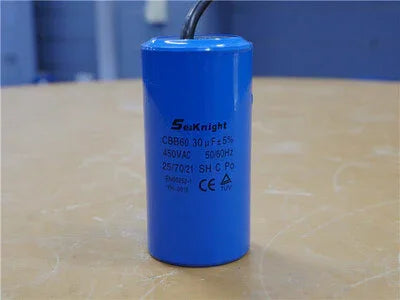
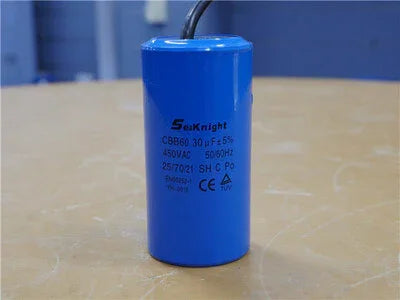
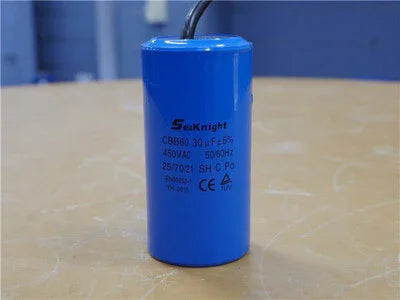
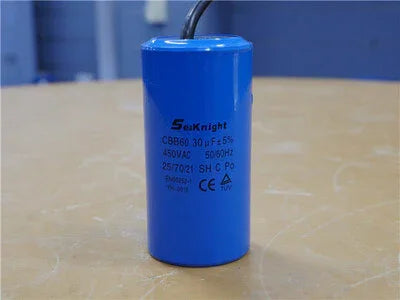
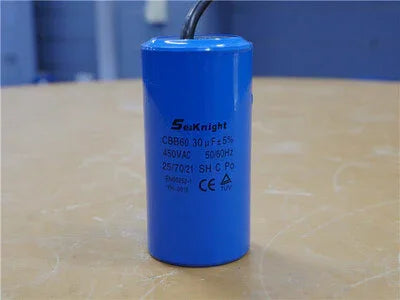
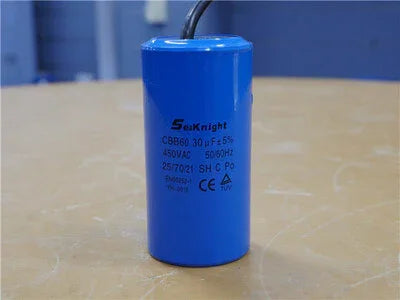
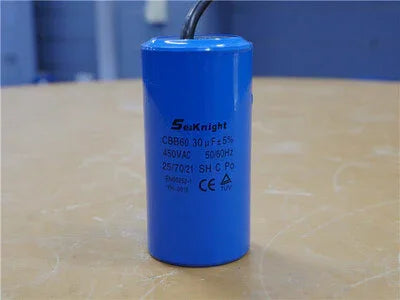
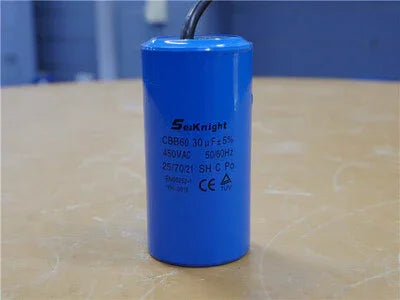
Capacitor

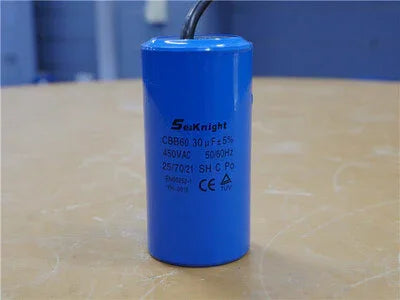
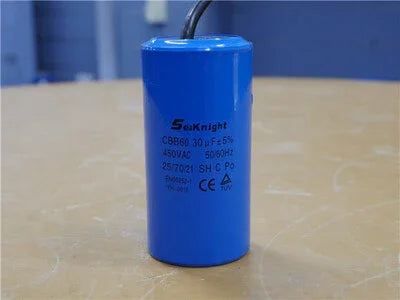
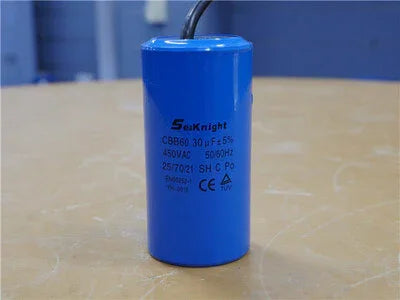
HankeMotor stocks 19 motor capacitors from 8µF to 350µF: CBB60 polypropylene running capacitors (450V, 50/60Hz) and aluminium electrolytic starting capacitors (250VAC). All $44.80. For single-phase motors, air compressors, pumps, and fans. Glen Waverley VIC — 0401 634 280.

What can a capacitor use for?

There are two types of capacitor, starting capacitor and running capacitor. For electrical equipment that interacts with single phase motor, like air compressors, water pumps, blowers and fans, the starting capacitor helps provide the initial boost for starting the equipment and the running capacitor helps maintain the working of them. They are replaceable parts that are frequently used to replace the old ones which is an easy, cost-effective way to restore motor performance and extend service life of an equipment. 

Why choose HankeMotor’s capacitor

-       Various Types of Capacitors

We provide both start and run capacitors for various kinds of electric motors which can better support the equipment

-       Wide range of Capacitance Ratings

We provide multiple options of capacitance ratings that are available for compatibility with most of the common single phase motors and machines. 

-       Reliable Performance

We provide high-quality construction for our capacitor which ensures long service life even in tough working environments. 

-       Easy Replacement

Designed with quick swap function and can be replaced on most pumps, compressors, fans and so on

Read more
Filter1 - 12 of 19 results
Sort by Best selling
This collection covers two distinct types: running capacitors (CBB60, 450V, 8µF to 60µF) and starting capacitors (aluminium electrolytic, 250VAC, 50µF to 350µF). They are not interchangeable. Running capacitors stay energised continuously during motor operation. Starting capacitors connect only during the start cycle and disconnect once the motor reaches approximately 75% of rated speed. Using the wrong type or the wrong µF value will cause the motor to run hot, fail to start, or trip its thermal protection repeatedly.

If you are replacing a faulty capacitor, the µF rating and voltage rating are both printed on the capacitor body or on the motor nameplate. Match µF exactly for running capacitors. Starting capacitors allow a tolerance of approximately ±10% µF.

Running vs Starting - Which Type Does Your Motor Use?

Most single-phase induction motors in the 240V range use one of three configurations: run-only (permanent split capacitor), start-only (capacitor-start), or both (capacitor-start capacitor-run). Knowing which configuration your motor uses determines which replacement part you need.

Type Function Duty Typical µF Range Voltage Rating Shape / Construction
Running (CBB60) Maintains phase shift during continuous operation; improves power factor and torque stability Continuous (100% duty cycle) 2µF to 100µF 450V AC Cylindrical polypropylene film; typically round body with wire leads or spade terminals
Starting (electrolytic) Provides high starting torque boost; disconnects via centrifugal switch once running speed is reached Intermittent only (3-5 seconds per start) 50µF to 1200µF 125VAC to 330VAC Cylindrical aluminium can; typically larger diameter than running cap

Critical distinction: A starting capacitor connected as a running capacitor will overheat and fail within minutes. Starting capacitors are electrolytic and rated for intermittent duty only. If your motor has one capacitor and it stays permanently wired to the motor (not switched out by a centrifugal switch), it is a running capacitor.

CBB60 Running Capacitor Sizing by Motor Power

The general sizing rule for 240V single-phase motors: approximately 2µF to 3µF of running capacitance per 100W of motor output. This gives a starting point for replacement. Always cross-reference against the motor nameplate capacitor specification if available, as motor manufacturers often specify exact values that optimise efficiency for their particular winding design.

Motor Power Typical Running Cap (µF) CBB60 Model in Stock Price
250W / 0.33HP 5µF to 8µF CBB60 450V 8µF $44.80
370W / 0.5HP 8µF to 10µF CBB60 450V 8µF $44.80
550W / 0.75HP 10µF to 15µF CBB60 450V 15µF $44.80
750W / 1HP 16µF to 20µF CBB60 450V 20µF $44.80
1100W / 1.5HP 22µF to 25µF CBB60 450V 25µF $44.80
1500W / 2HP 30µF to 35µF CBB60 450V 30µF $44.80
2200W / 3HP 40µF to 50µF CBB60 450V 40µF or 50µF $44.80
3000W / 4HP 50µF to 60µF CBB60 450V 55µF or 60µF $44.80

If the motor nameplate lists a µF range (e.g. "40-50µF"), choose the middle value unless the motor runs hot or has torque issues, in which case move toward the upper end of the range. Voltage rating must always be equal to or greater than the original. A 450V capacitor is safe to use in any 240V application — the voltage rating specifies maximum safe working voltage, not operating voltage.

Starting Capacitor Range - High-Torque Boost for Compressors and Pumps

Starting capacitors in this range are 250VAC aluminium electrolytic, rated for the 3-5 second start cycle only. Available in 50µF, 100µF, and 350µF at $44.80 each {{RESEARCH NEEDED: confirm full list of starting cap µF values for remaining 7 products not visible on first page}}.

Sizing starting capacitors: the starting capacitance is typically 2 to 3 times the running capacitance value for the same motor. A motor with a 20µF run capacitor will typically use a 50µF to 60µF start capacitor. A motor with a 40µF run capacitor will typically use a 100µF to 120µF start capacitor.

Motor Power Typical Starting Cap (µF) Stock Item Price
550W–1100W (0.75–1.5HP) 50µF to 100µF 250VAC 50µF or 100µF $44.80
2200W–3000W (3–4HP) 200µF to 350µF 250VAC 350µF $44.80

Air compressor replacement note: Piston air compressors with single-phase motors frequently fail their starting capacitor when the compressor tries to restart against residual tank pressure (an unloaded restart). If your compressor motor hums for 2-3 seconds then trips its thermal overload, the starting capacitor is the most likely fault before the motor windings. Replace the start cap first before condemning the motor.

How to Read Your Existing Capacitor - What the Markings Mean

The capacitor body carries all the information needed for a direct replacement. Key markings:

  • µF or MFD: Microfarad rating. This is the primary replacement spec. Match it exactly for running capacitors.
  • VAC or V~: AC voltage rating. Must be equal to or higher than the original. Never substitute a lower voltage rating.
  • Hz: Frequency. Australian mains is 50Hz. CBB60 capacitors rated 50/60Hz are correct for Australian use.
  • CBB60 or CBB61: CBB60 is the cylindrical motor run capacitor (for compressors, pumps, motors). CBB61 is the oval fan capacitor (for ceiling fans, air conditioner indoor units). They are different products — CBB61 is not an equivalent substitute for CBB60.
  • Class P2 or P0: IEC climatic category. P2 tolerates -25°C to +70°C; P0 tolerates -40°C to +85°C. Either is suitable for Australian workshop conditions.

If the capacitor body is bulging, leaking, or the top vent disc has ruptured, the capacitor has failed. Replace with exact µF and at least equivalent voltage rating.

Single-phase motor faults attributable to capacitors follow a consistent pattern:

  • Motor hums but does not start, then trips thermal protection: Starting capacitor fault (or centrifugal switch fault). The motor cannot generate enough starting torque to reach running speed.
  • Motor starts but runs hot, draws higher than rated current, has reduced torque: Running capacitor fault. The motor runs on its main winding only, losing the phase-split efficiency the run cap provides.
  • Motor starts and runs normally but capacitor is visibly bulged or leaking: Replace the running capacitor before it causes a hard failure. A failed run cap left in circuit stresses the motor windings.
  • Motor runs but compressor does not build pressure to rated PSI: This is a compressor valve fault, not a capacitor fault. Replacing the capacitor will not fix a valve leak.

Related Products

Motor Capacitor FAQ

Can I fit a higher µF value to get more starting torque?
No. Fitting a capacitor above the nameplate rating increases current in the auxiliary winding beyond its thermal rating, accelerating insulation degradation and shortening motor life. The nameplate µF is the correct value, not a minimum. A motor producing less torque than before needs a winding inspection, not a larger capacitor.
My compressor has two capacitors -- how do I know which one has failed?
Piston compressor motors (CSCR type) have both a starting and a running capacitor. The starting capacitor is typically larger (100µF or more, cylindrical electrolytic with two terminals at one end) and connects via the centrifugal switch. The running capacitor is smaller (8–50µF, oval or round CBB60 film type with spade terminals). Test each separately with a capacitance meter -- replacing the wrong one is the most common mistake on compressor motor faults.
How do I tell if my motor is CSIR or CSCR?
Check the terminal block inside the motor junction box. A CSIR motor has one capacitor (starting only) and three terminals: common, run, and start. A CSCR motor has two capacitors and four connections on the terminal block. If only one capacitor is fitted and the motor starts slowly under load, it is CSIR design -- the starting capacitor is the correct replacement path.
Is a 400V AC rated capacitor safe on Australian 240V supply?
Not recommended. The 450V AC rating provides necessary margin above peak voltage (approximately 340V peak on a 240V RMS supply) plus voltage tolerance. A 400V AC film capacitor operates closer to its dielectric stress limit under normal Australian supply conditions, reducing service life. Always specify 450V AC or higher for 240V 50Hz applications.
Do stored capacitors have a shelf life?
CBB60 film capacitors stored in dry conditions below 35°C retain specification for 10 or more years. Aluminium electrolytic starting capacitors have a shorter storage life -- typically 3 to 5 years before the electrolyte begins to dry, reducing capacitance below specification even in unused stock. Test any starting capacitor that has been on a shelf for several years with a meter before fitting.