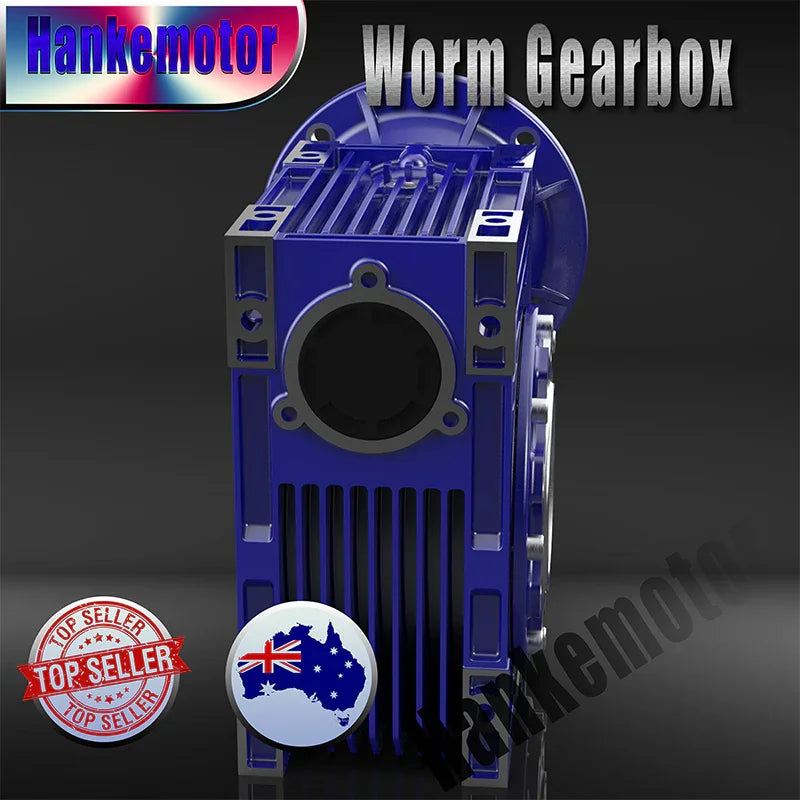
NMRV Worm Gearboxes and Speed Reducers
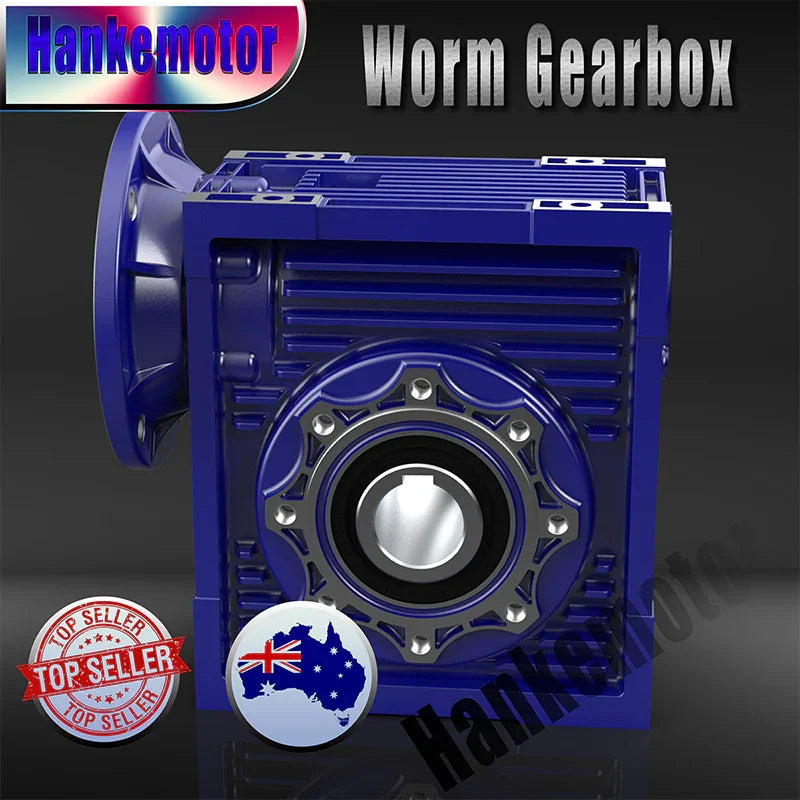
Need to slow a motor down and increase output torque? HankeMotor stocks NMRV worm gearboxes and speed reducers for conveyors, mixers, turntables, hoists, gate drives, workshop machinery and motor gearbox builds.

The most important details to match are the reduction ratio, NMRV frame size, input flange, input shaft size and output shaft size. A gearbox with the right ratio but the wrong flange or shaft size may not fit your motor, even if the kW rating looks correct.

Choose the ratio first based on the output speed you need, then confirm the frame size and motor connection. Motor and gearbox combination packs are available where the motor and gearbox are already matched for direct coupling.

Filter1 - 12 of 84 results
Sort by Best selling

Need to slow a motor down and increase output torque? HankeMotor stocks NMRV worm gearboxes and speed reducers for conveyors, mixers, turntables, hoists, gate drives, workshop machinery and motor gearbox builds.

The most important details to match are the reduction ratio, NMRV frame size, input flange, input shaft size and output shaft size. A gearbox with the right ratio but the wrong flange or shaft size may not fit your motor, even if the kW rating looks correct.

✓ NMRV030 to NMRV130 — 8 frame sizes in stock
✓ 7.5:1 to 100:1 reduction ratios
✓ Motor + gearbox combination packs available, ready-matched
✓ Melbourne warehouse, dispatched within 24 hours

Choose the ratio first based on the output speed you need, then confirm the frame size and motor connection.

NMRV Frame Size and Shaft Specification

Frame size determines the physical dimensions, torque capacity, and shaft sizes. Select the frame first based on the torque required at the output shaft, then confirm the input shaft matches your motor.

Frame Housing Input Shaft Ratios Available Typical Motor Best For
NMRV030 Aluminium 9mm, 11mm 10:1, 25:1, 30:1, 50:1 0.25–0.37kW Light conveyor, shutter drives, small agitators
NMRV040 Aluminium 9mm, 11mm, 14mm 10:1, 20:1, 40:1, 80:1, 100:1 0.37–0.75kW Gate automation, light conveyor belt take-up
NMRV050 Aluminium 11mm, 14mm, 19mm 7.5:1, 10:1, 20:1, 25:1, 40:1, 50:1, 100:1 0.75–2.2kW Cement mixers, conveyor drives, irrigation pumps
NMRV063 Not listed on product page 14mm, 19mm, 24mm 7.5:1, 10:1, 30:1, 40:1, 50:1, 80:1 IEC 71–90 frame motors Medium conveyor, mixer, packaging line drives
NMRV075 Not listed on product page 14mm, 19mm, 24mm, 28mm 7.5:1, 10:1, 25:1, 40:1, 50:1, 80:1, 100:1 IEC 71–112 frame motors Medium-duty conveyor, mixer paddle, packaging line
NMRV090 Not listed on product page 19mm, 24mm, 28mm 7.5:1, 10:1, 25:1, 80:1, 100:1 IEC 80–112 frame motors Heavier conveyor, larger mixer, packaging line drives
NMRV110 Cast iron 19mm, 24mm, 28mm, 38mm 10:1, 50:1, 80:1 4–7.5kW Heavy conveyor, large agitator, mixer paddle
NMRV130 Cast iron 24mm, 28mm, 38mm 10:1, 80:1, 100:1 3–5.5kW Very slow output applications, winch drives

B5 flange mount is the standard on all HankeMotor NMRV units — the large round flange that bolts directly to an IEC motor face. If your motor has a B14 face (small square flange), an adaptor plate is required.

How to Calculate the Reduction Ratio You Need

The ratio is your motor speed divided by the output speed required. Most Australian motors run at either 1400rpm (4-pole) or 2800rpm (2-pole) at 50Hz supply.

Worked example: a 1400rpm motor and a cement mixer drum that needs to turn at 35rpm → 1400 ÷ 35 = 40:1 ratio. The NMRV050 40:1 is the standard choice for this application.
Ratio Output (1400rpm input) Output (2800rpm input) Typical Application
10:1 140 rpm 280 rpm Slower conveyor, light mixer
20:1 70 rpm 140 rpm General purpose conveyor
30:1 47 rpm 93 rpm Slow conveyor, light auger
40:1 35 rpm 70 rpm Cement mixer drum, gate opener
50:1 28 rpm 56 rpm Slow paddle mixer, winch
100:1 14 rpm 28 rpm Very slow output, roll-up door drive

How to Choose an NMRV Worm Gearbox

Reduction ratio: sets output speed and torque multiplication. Divide motor RPM by required output RPM — e.g. 1400 RPM to 35 RPM needs about 40:1.
NMRV frame size: determines body size, torque capacity and shaft dimensions. Don't choose by ratio alone — confirm the frame suits the required load.
Input flange: controls whether the gearbox bolts directly to your motor face. Most HankeMotor units use B5 mounting — check your motor flange first.
Input shaft size: check the motor shaft diameter — 11mm, 14mm, 19mm or 24mm are common.
Output shaft size: confirm sprocket, pulley, coupling or hub size before selecting the gearbox.
Duty cycle: high ratios generate more heat and lose more efficiency. For continuous high-load use, allow motor sizing margin or contact us before ordering.

Self-Locking: The Property Most Buyers Miss

NMRV worm gearboxes at ratios of 30:1 and above are self-locking (non-back-drivable): the output shaft cannot drive the worm, so the load cannot back-drive the motor when power is off. This is a safety advantage for hoists, gate drives, and vertical lift applications — the load holds position without a brake.

The trap: if you need the output shaft to be manually rotated when the motor is off — e.g. to hand-crank a machine into position — a self-locking worm gearbox will prevent this. At 30:1 and above, you cannot turn the output shaft by hand. If manual override is required, consider a helical or bevel-helical gearbox instead. Call us before ordering if this applies to your application.

Efficiency Loss at High Ratios: What This Means for Motor Sizing

Worm gearboxes trade efficiency for compactness. Unlike helical gearboxes that maintain 95%+ efficiency at all ratios, worm gearboxes lose efficiency as the ratio increases due to the sliding contact between worm and wheel. At high ratios, the motor must be oversized to compensate:

Ratio Approx. Efficiency Motor Sizing Note
10:1 85–90% Standard motor sizing applies
20:1 80–85% Add 15–20% to motor power calculation
40:1 70–75% Size motor up one step from your calculated requirement
50:1 65–70% Significant heat generation under continuous load — ventilation required
100:1 50–60% Not suited for continuous duty at full torque — use two-stage gearbox instead

For continuous duty at 50:1 or 100:1, pair the gearbox with a motor one power rating above the calculated shaft requirement to manage heat and protect the gearbox oil seal.

Motor Pairing and Ready-to-Run Packs

HankeMotor stocks motor and gearbox combination packs — the motor is already flange-matched to the NMRV input shaft, eliminating the need for a separate coupling or adaptor. The most common combination is a 1400rpm single phase motor with an NMRV050 at 40:1, producing 35rpm output for cement mixer and conveyor applications.

If pairing a motor from the HankeMotor single phase range to an NMRV gearbox independently:

Confirm motor B5 flange dimensions match the NMRV input flange — NMRV030/040/050 suit IEC 56–90 frame motors; NMRV110/130 suit larger frames.
Confirm input shaft diameter — a 0.75kW motor in IEC frame 71 has a 19mm shaft; a 1.5kW in the same frame may have a 19mm or 24mm shaft. Check before ordering.
For 240V single phase motors paired with NMRV050 or larger, CSCR start type is recommended for the higher starting torque needed to move a loaded conveyor or mixer from rest.

When a Worm Gearbox Is Not the Right Choice

Your application requires more than 75% duty cycle at high torque — efficiency loss becomes heat, and continuous high-load operation shortens gearbox life.
Energy cost is a concern for a motor running 8+ hours per day — a helical gearbox at 95%+ efficiency pays back its higher purchase cost within months at commercial power rates.
You need the output shaft to back-drive the input — at 30:1+ ratios, worm gearboxes are self-locking and cannot be back-driven.
What is the difference between NMRV and NRV worm gearboxes?
NMRV is the aluminium or cast iron housing with a hollow bore B5 flange input, designed for direct IEC motor face mounting. NRV is the same gear unit without the motor input flange — it uses a solid input shaft instead, connecting via a coupling or belt. For most Australian applications pairing directly with an IEC motor, NMRV is correct. NRV suits installations where the motor drives through a belt or coupling rather than direct-mount.
Do worm gearboxes need oil changes?
Yes. NMRV gearboxes are factory-filled with synthetic gear oil. In continuous duty, oil should be changed every 2,000–5,000 operating hours depending on ambient temperature and load. In intermittent workshop use (under 4 hours/day), annual oil inspection is sufficient. Check oil level via the sight glass or level plug — low oil is the most common cause of premature worm wheel wear.
Can I use a VFD to control an NMRV gearbox and motor combination?
Yes. Worm gearboxes are compatible with VFD-controlled motors. However, at low VFD output frequencies (below 25Hz), motor cooling is reduced and the motor may overheat under continuous load — an inverter-duty motor or independently powered cooling fan is recommended below 25Hz continuous. VFD variable speed does not eliminate the need for a gearbox: the VFD adjusts speed within a range, the gearbox sets the torque multiplication and operating speed band.

For application advice or to confirm motor-gearbox compatibility: 0401 634 280 | hankemotors@gmail.com | Unit 1, 28 Aristoc Road, Glen Waverley VIC 3150.
Related: Single Phase Electric Motors | Variable Frequency Drives | Piston Air Compressors

Frequently Asked Questions

How do I choose the right worm gearbox ratio?
Divide the motor speed by the output speed you need. For example, if your motor runs at 1400 RPM and your machine needs about 35 RPM at the output shaft, you need approximately a 40:1 ratio. The ratio affects both speed reduction and torque multiplication, so check the required output speed before choosing a gearbox.
What does NMRV mean on a worm gearbox?
NMRV refers to a common worm gearbox style with a motor mounting flange and hollow input design for direct connection to an IEC motor. It's commonly used for compact right-angle motor gearbox assemblies. When ordering, check the NMRV frame size, ratio, input flange and input shaft size to make sure it matches your motor.
What is the difference between a worm gearbox and a speed reducer?
A speed reducer is a general term for a gearbox that reduces motor speed and increases output torque. A worm gearbox is one type of speed reducer using a worm gear and worm wheel. NMRV worm gearboxes are popular where compact right-angle drive, high reduction ratio and simple motor mounting are required.
Can I connect an electric motor directly to an NMRV gearbox?
Yes, if the motor flange and shaft match the gearbox input. Many NMRV gearboxes are designed for direct B5 flange motor mounting, but the motor frame size, flange size and shaft diameter must be checked first. A motor and gearbox pack is the safest choice when you want a ready-matched setup.
Are worm gearboxes self-locking?
Some worm gearboxes can resist back-driving, especially at higher reduction ratios, but self-locking should not be treated as a guaranteed brake. Load, ratio, lubrication, wear and operating conditions all matter. For hoists, lifts or safety-critical holding applications, use a proper brake or locking system rather than relying only on gearbox self-locking.
Can I use a VFD with a motor and worm gearbox?
Yes. A VFD can be used with a compatible electric motor and worm gearbox to adjust motor speed. The gearbox sets the main speed reduction and torque range, while the VFD fine-tunes operating speed. At low frequency, motor cooling is reduced, so continuous low-speed operation may require an inverter-duty motor or external motor cooling.
Not sure which gearbox matches your motor? Call 0401 634 280 or email hankemotors@gmail.com
Our Glen Waverley team can confirm ratio, frame size and shaft fitment before you order.

Frequently Asked Questions

How do I choose the right worm gearbox ratio?
Divide the motor speed by the output speed you need. For example, if your motor runs at 1400 RPM and your machine needs about 35 RPM at the output shaft, you need approximately a 40:1 ratio. The ratio affects both speed reduction and torque multiplication, so check the required output speed before choosing a gearbox.
What does NMRV mean on a worm gearbox?
NMRV refers to a common worm gearbox style with a motor mounting flange and hollow input design for direct connection to an IEC motor. It is commonly used for compact right-angle motor gearbox assemblies. When ordering, check the NMRV frame size, ratio, input flange and input shaft size to make sure it matches your motor.
What is the difference between a worm gearbox and a speed reducer?
A speed reducer is a general term for a gearbox that reduces motor speed and increases output torque. A worm gearbox is one type of speed reducer using a worm gear and worm wheel. NMRV worm gearboxes are popular where compact right-angle drive, high reduction ratio and simple motor mounting are required.
Can I connect an electric motor directly to an NMRV gearbox?
Yes, if the motor flange and shaft match the gearbox input. Many NMRV gearboxes are designed for direct B5 flange motor mounting, but the motor frame size, flange size and shaft diameter must be checked first. A motor and gearbox pack is the safest choice when you want a ready-matched setup.
Are worm gearboxes self-locking?
Some worm gearboxes can resist back-driving, especially at higher reduction ratios, but self-locking should not be treated as a guaranteed brake. Load, ratio, lubrication, wear and operating conditions all matter. For hoists, lifts or safety-critical holding applications, use a proper brake or locking system rather than relying only on gearbox self-locking.
Can I use a VFD with a motor and worm gearbox?
Yes. A VFD can be used with a compatible electric motor and worm gearbox to adjust motor speed. The gearbox sets the main speed reduction and torque range, while the VFD fine-tunes operating speed. At low frequency, motor cooling is reduced, so continuous low-speed operation may require an inverter-duty motor or external motor cooling.