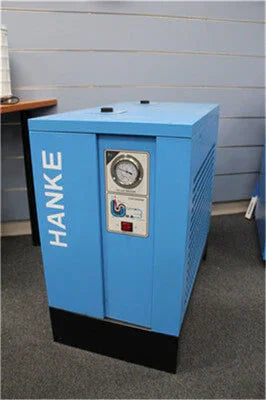
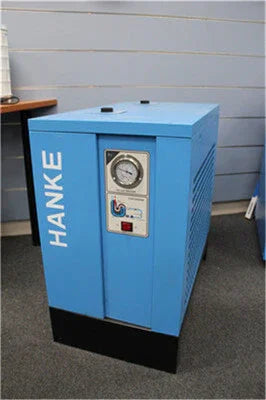
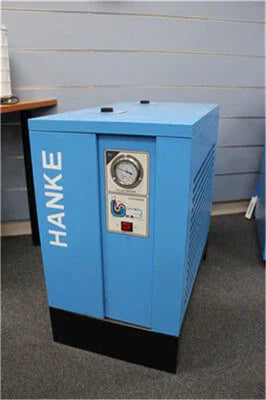
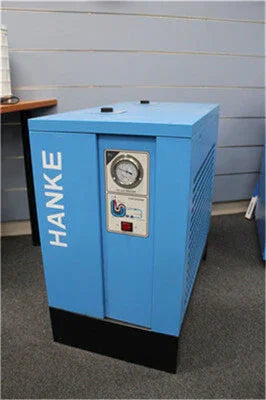
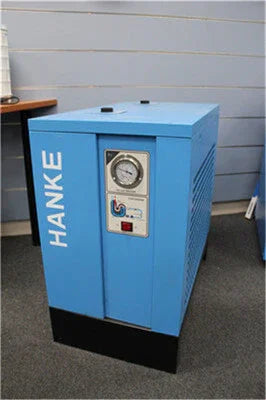
Refrigerated Air Dryers for Compressed Air Systems

If your compressed air line is carrying water, your tools, paint finish and machinery are already at risk. A refrigerated air dryer removes moisture before it reaches your spray gun, CNC spindle, pneumatic tools or production equipment.

✓ 20 models in stock — 28 to 495 CFM
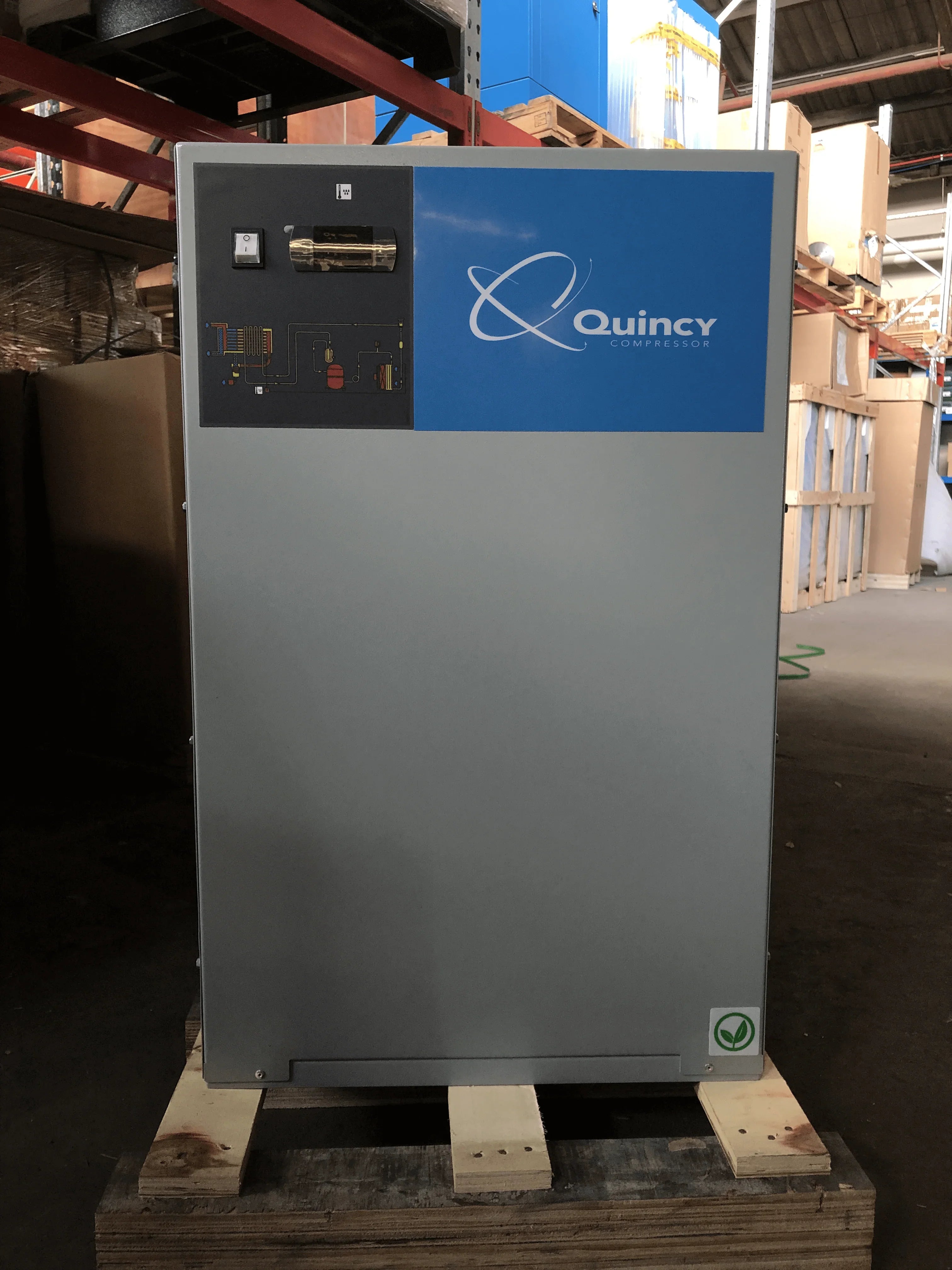
✓ Two series: Standard and Quincy QPR
✓ Melbourne warehouse, dispatched within 24 hours
✓ 1-year warranty on every unit

Not sure which size you need? Call 0401 634 280 or email hankemotors@gmail.com with your compressor's CFM or L/min rating — we'll help you match the right dryer before you buy.

Filter1 - 12 of 20 results
Sort by Best selling

What Does a Refrigerated Air Dryer Actually Do?

A refrigerated air dryer sits between your air compressor and your tools, spray gun or CNC equipment. Inside the unit, a refrigeration circuit cools the incoming compressed air to approximately 3–5°C, which forces water vapour to condense out as liquid — the same way condensation forms on a cold drink can. The condensed water is drained off automatically, and the air is reheated slightly before it leaves the unit so it doesn't sweat further down the line.

Result: dry, stable compressed air reaching your spray gun, CNC spindle or pneumatic tools — without rust, fish-eye paint defects, or moisture contamination in your air lines.

Sizing a Dryer to Your Compressor

The number that matters is airflow, not tank size. Match the refrigerated air dryer to your compressor's free air delivery (FAD), usually shown as CFM or L/min on the compressor's data plate. To convert L/min to CFM, divide by 28.3 — for example, 1,190 L/min is approximately 42 CFM.

Which Dryer Size Do You Need?

5–7.5 HP / 3.7–5.5 kW
Small workshop compressor
Min Dryer: 28 CFM  |  Recommended: 42 CFM
From AU$1,324
7.5–10 HP / 5.5–7.5 kW
Spray painting, automotive finishing
Min Dryer: 42 CFM  |  Recommended: 60 CFM
From AU$1,841
10–15 HP / 7.5–11 kW
Powder coating, sandblasting
Min Dryer: 60 CFM  |  Recommended: 80 CFM
From AU$2,088
15–20 HP / 11–15 kW
CNC air lines, pneumatic tooling
Min Dryer: 80 CFM  |  Recommended: 106 CFM
From AU$2,334
20–30 HP / 15–22 kW
Industrial compressor, production line
Min Dryer: 106 CFM  |  Recommended: 142–186 CFM range
From AU$3,104
45+ HP / 33+ kW
High-volume industrial air systems
Recommended: 232–495 CFM  (Standard & Quincy series)
From AU$4,786
The headroom rule: Always size the dryer at or above your compressor's actual free air delivery (FAD) — not tank capacity. Undersizing leaves moisture in the line, especially during continuous use. If your compressor is rated in L/min, divide by 28.3 to get CFM before comparing.

Two Series to Choose From

Standard Series
✓ 28 to 386 CFM range
✓ Most economical option at lower CFM (28–106 CFM)
✓ 240V / 1Ph / 50Hz, Australian-configured
✓ 1-year warranty
Range: AU$1,324–$11,787
Quincy QPR Series
✓ 40 to 495 CFM range
✓ Recognised commercial brand
✓ Often the more cost-effective choice above 230 CFM
✓ 1-year warranty
Range: AU$2,224–$6,560

Unsure which series fits your budget and airflow needs? Contact us and we'll point you to the best match — both series are in stock and ship from the same Glen Waverley warehouse.

Applications That Require Dry Compressed Air

Spray painting & automotive finishing: water vapour causes fish-eye and orange-peel defects that can't be sanded out
Powder coating: moisture prevents even powder adhesion and causes pinholes in the cured finish
Sandblasting & abrasive blasting: wet air clumps abrasive media and blocks nozzles mid-job
CNC machining & pneumatic tooling: water corrodes air motor vanes and causes premature bearing failure
Pneumatic control systems: moisture freezes in cold environments and blocks solenoid valves

When You Need Something Different

A refrigerated dryer isn't the full answer if:
You need dew point below -20°C: electronics manufacturing, pharmaceutical or food-grade air needs a desiccant dryer instead. Contact us to check what fits your process.
You already have bulk liquid water pooling in your tank or lines: a water separator removes water that has already condensed; the refrigerated dryer removes moisture before it condenses. For continuous or high-demand use, you typically need both, not one instead of the other.
Installing outdoors or in an unheated shed: keep the unit within its rated ambient range, ventilated, and protected from rain, dust and freezing conditions.

Frequently Asked Questions

What does a refrigerated air dryer do?
A refrigerated air dryer removes moisture from compressed air by cooling the air stream so water vapour condenses before it reaches your tools or equipment. This helps protect spray guns, CNC machines, pneumatic tools, valves and air lines from water contamination, corrosion and poor finish quality.
How do I choose the right CFM air dryer for my compressor?
Choose a refrigerated air dryer rated at or above your compressor's free air delivery, also called FAD. Do not size the dryer by tank capacity alone. If your compressor output is listed in L/min, divide the number by 28.3 to convert it to CFM. For continuous use, spray painting, sandblasting or industrial air lines, choose extra capacity rather than undersizing the dryer.
Do I still need a water separator if I have an air dryer?
Yes, in many systems both are useful. A water separator removes bulk liquid water that has already condensed in the tank or air line. A refrigerated air dryer removes moisture from the compressed air before it condenses downstream. For spray painting, CNC, powder coating and pneumatic tools, using filtration with the dryer gives cleaner and more reliable air.
Is a refrigerated air dryer suitable for spray painting?
Yes. Spray painting is one of the most common reasons to install a refrigerated air dryer. Moisture in the air line can cause fish-eye marks, orange peel, water spots and inconsistent paint finish. The dryer should be matched to the compressor output and used with suitable filtration before the spray gun.
What is the difference between a refrigerated dryer and a desiccant dryer?
A refrigerated dryer is suitable for most workshop and industrial compressed air systems and typically provides a pressure dew point around 3-5 C. A desiccant dryer is used when much drier air is required, such as instrument air, electronics, pharmaceutical or specialist production processes. For general spray painting, CNC, air tools and workshop use, a refrigerated air dryer is usually the practical choice.
Can I use a refrigerated air dryer outdoors or in an unheated shed?
Refrigerated air dryers should be installed in a clean, ventilated area within the rated ambient temperature range. They are not designed to operate in freezing conditions or exposed outdoor locations. If the air dryer is installed in a shed, allow enough ventilation around the condenser and protect the unit from rain, dust and very low temperatures.