
PRICE DROP
Variable Frequency Drives (VFD/VSD) for Sale Australia — All Series — Prices reduced 21 August 2026
—
900+ products, most now 15% lower
Variable Frequency Drives (VFD/VSD) for Sale Australia — All Series

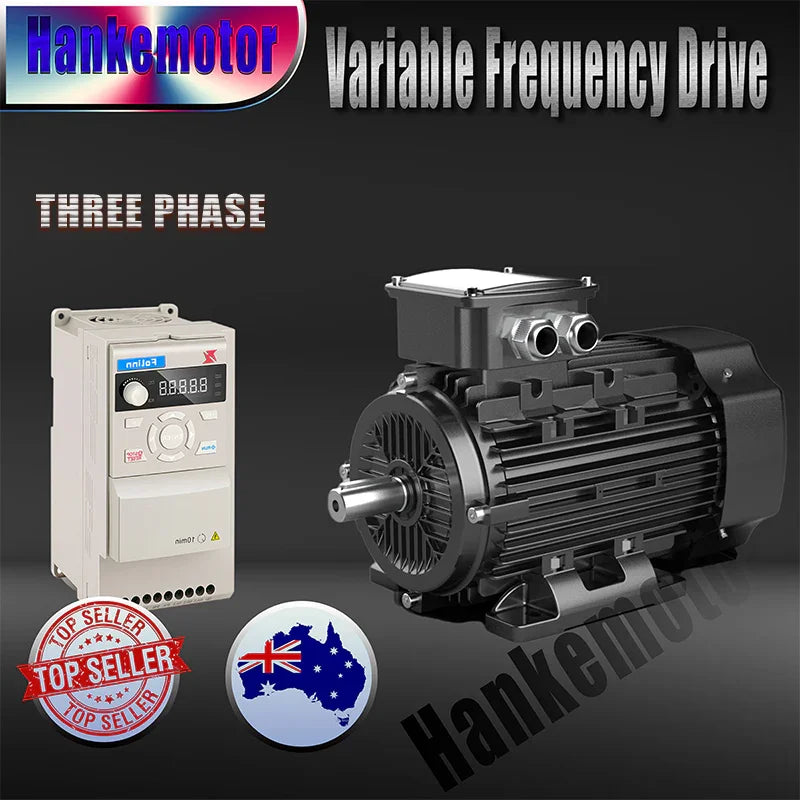
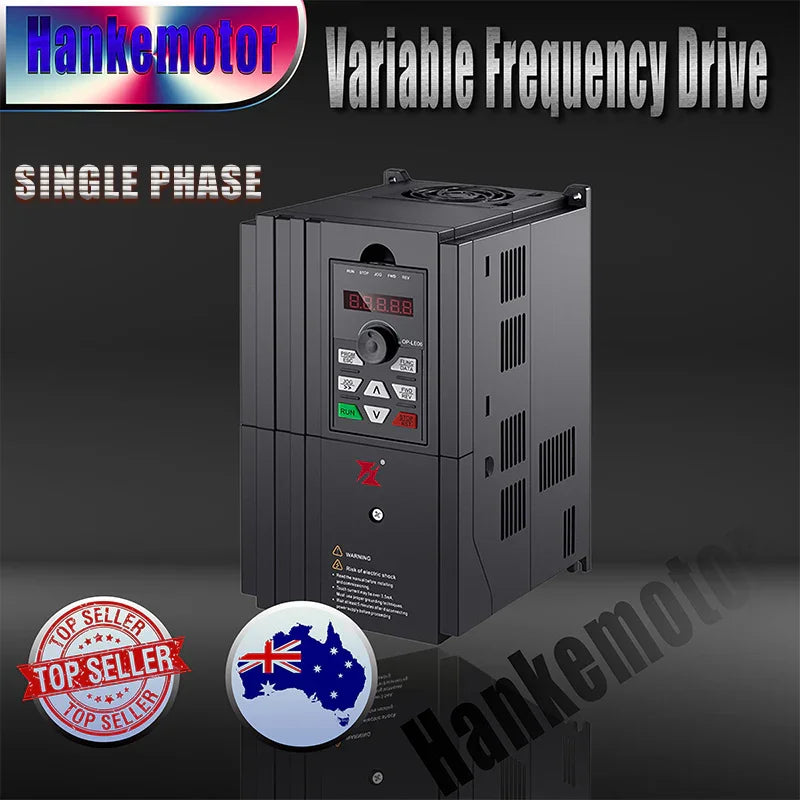
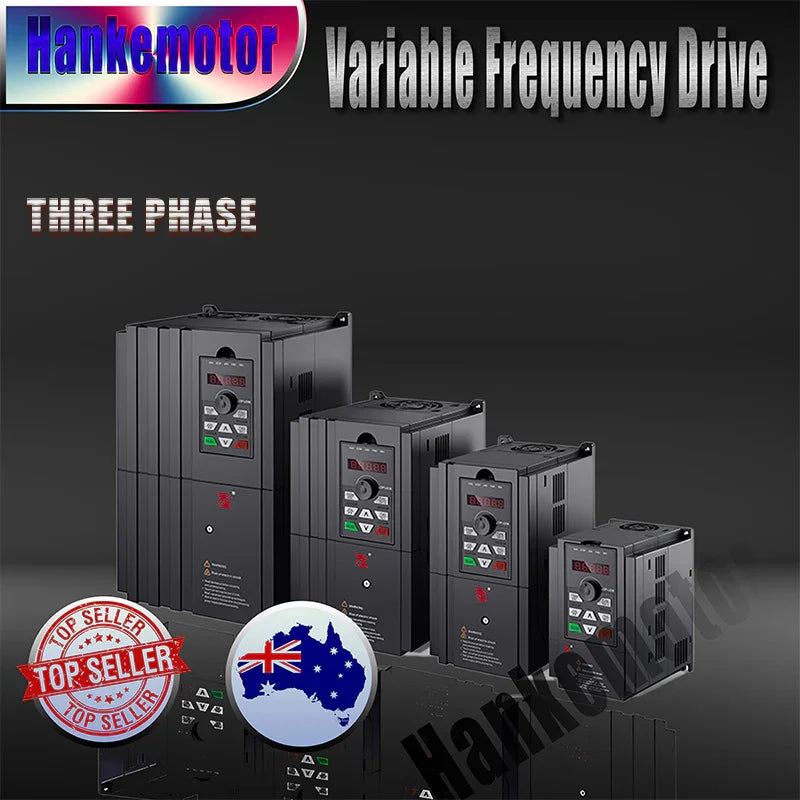
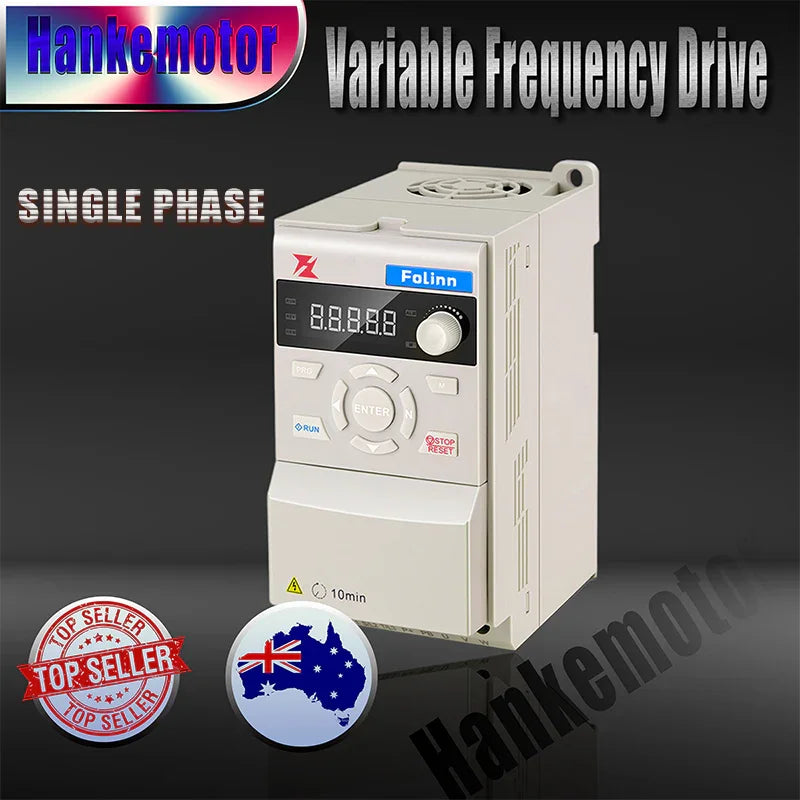
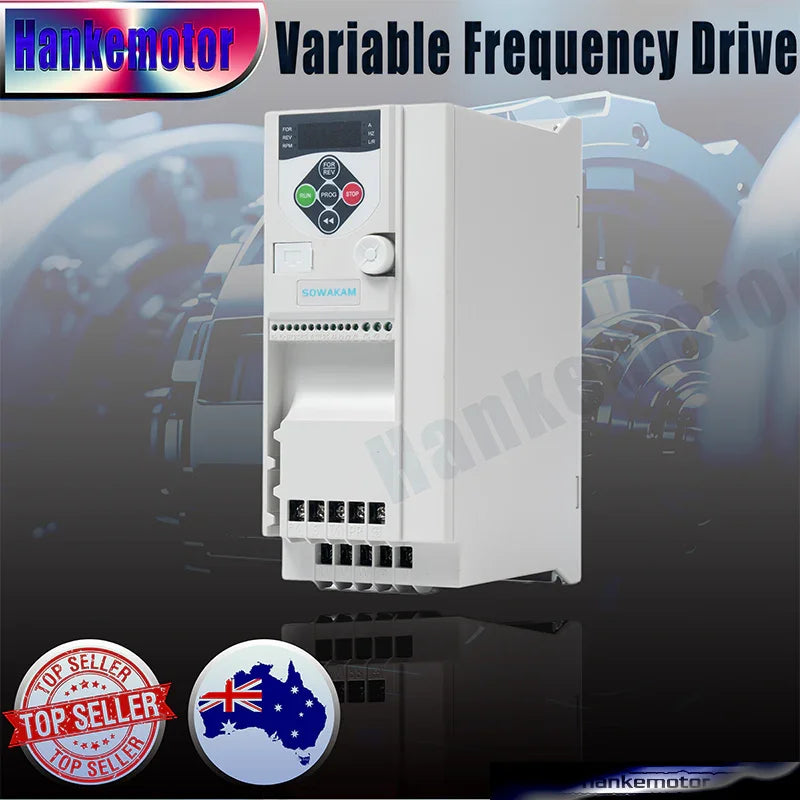
HankeMotor stocks VFD/VSD drives across three ranges — SW100/SW200 (G4), Fulinn BD600, and Fulinn H1 series — covering single-phase 240V input and three-phase 415V input, 0.75kW to 37kW. Melbourne stock, ships Australia-wide.
Which Situation Are You In?
Only single-phase 240V power
Want to run a three-phase motor from a domestic or workshop power point
All three ranges offer a single-phase input option — see below for which one fits your budget and application.
Already have three-phase 415V power
Want speed control, soft-start or load management on an existing three-phase motor
BD600 and H1 both offer three-phase input drives — no phase conversion involved, straightforward drive-to-motor match.
Compact / DIN-rail installation
Panel-mounted or space-constrained application
The H1 series is DIN-rail mountable with a detachable keypad — see below.
Three Drive Ranges — What Actually Differs
SW100 / SW200 (G4)
Economy range, 0.75kW–18.5kW
Single-phase 240V input only → three-phase 415V output
1-year replacement warranty
Motor-only output — see restrictions below
Commercial-grade
Fulinn BD600
0.75kW–37kW
Single-phase 240V → three-phase 240V, or three-phase 415V → three-phase 415V
2-year replacement warranty
Standard enclosure, widest power range
Fulinn H1
Compact range, 0.75kW–7.5kW
Single-phase 240V or three-phase 415V input → three-phase output
2-year replacement warranty
DIN-rail mount, detachable keypad, built-in PID, 0–1000Hz range
Why the output voltage matters: G4 always outputs 415V three-phase — pair it with a standard 415V(Y)-rated motor as-is. BD600 and H1's single-phase-input models output 240V three-phase — if your motor is dual-rated 415V(Y)/240V(△), reconnect it in delta at the terminal box first. Check the exact product spec sheet if you're unsure which output your drive produces.
Already on Three-Phase? Speed Control & Soft-Start Options
If you already have a three-phase 415V supply, a three-phase input BD600 or H1 drive adds variable speed control and soft-start without any phase conversion — straightforward drive-to-motor matching by kW.
Lathes & mills: variable spindle speed, smoother finish control
Conveyors: adjustable line speed for production and packaging
Compressors: soft-start reduces mechanical and electrical startup stress
Pumps & fans: match output to demand, reduce energy use at partial load
Three-phase input models are in stock from 0.75kW through to 37kW for larger industrial and CNC applications — see current pricing and exact current-draw specs on each product page.
Sizing & Safety Basics
Single-phase input drives need extra headroom: single-phase input draws roughly double the equivalent three-phase current at the same motor load — size up rather than matching the motor's kW exactly, especially for continuous-duty loads.
Capacitor-run single-phase motors cannot use a VFD: if your motor has start/run capacitors (CSIR, CSCR or PSC type — most workshop compressor and pool pump motors), it is not compatible with any VFD range. You need a three-phase induction motor paired with a single-phase input drive instead.
Always confirm motor voltage, phase, kW, full-load current and rated frequency from the nameplate before ordering.
Related: Three-Phase Motors 415V | Single-Phase Motors 240V | Worm Gearboxes | Air Compressors
Need help choosing? Call 0401 634 280 or email hankemotors@gmail.com
Our Glen Waverley team can match you with the right drive for your motor and application.
Frequently Asked Questions
What is the difference between a VFD, VSD, and inverter?
VFD (Variable Frequency Drive), VSD (Variable Speed Drive), and inverter are used interchangeably in Australian industrial supply. All three describe a unit that converts fixed-frequency AC input into adjustable-frequency AC output to control motor speed. The terms frequency inverter and AC drive mean the same thing. For purchasing, they are the same product category -- the differences are in frame size, input phase, and control features, not the underlying technology.
Can I run a three-phase motor from single-phase 240V power?
Yes, with the correct VFD model. You need a drive that accepts single-phase 240V input and outputs three-phase voltage to the motor. Both the Fulinn BD600 and H1 series include single-phase input variants for exactly this purpose, as does the SW100/SW200 (G4) range. When selecting, go one kW bracket above the motor's nameplate rating -- a 1.5 kW three-phase motor requires a 2.2 kW single-phase input VFD, because drawing all power from one phase instead of three increases input current significantly.
Can a VFD control a single-phase capacitor motor?
No. VFDs are designed for three-phase induction motors only. Connecting a single-phase capacitor motor (CSIR, CSCR, or PSC type -- the kind used in most workshop compressors and pool pumps) to a VFD will destroy the capacitor within minutes and may damage the drive. If you need variable speed on a single-phase supply, the correct approach is a three-phase induction motor paired with a single-phase input VFD.
What parameters do I need to set when commissioning a new VFD?
At minimum: motor rated voltage, motor rated current (from nameplate), motor rated frequency (50 Hz in Australia), motor rated RPM, and maximum output frequency. Set the acceleration and deceleration ramp times to suit your load -- too fast on a high-inertia load will trip the drive on overcurrent. For most standard induction motors, the default V/F control mode works without further tuning. If you are unsure, call 0401 634 280 and we can walk through the parameter set for your specific motor.
How do I choose the right VFD size?
Check the motor nameplate for voltage, phase, kW rating, full-load current, and frequency. For a 415V three-phase input VFD, match the drive to the motor rating and current. For a 240V single-phase input VFD, the drive may need to be oversized because all input power is drawn from one phase. Heavy loads such as compressors, conveyors, and high-inertia machines may also require extra sizing margin.
What applications are VFD and VSD drives used for?
VFD and VSD drives are used for motor speed control, soft starting, and smoother operation on equipment such as lathes, drill presses, pumps, fans, conveyors, grinders, mixers, and air compressor motors. They are especially useful when a machine needs adjustable speed, reduced starting shock, or better control under changing load conditions.
Do I need an electrician to install a VFD?
Yes. VFD wiring and commissioning should be completed by a qualified electrician or technician. Incorrect input voltage, wrong motor wiring, missing earth connection, or incorrect parameter settings can damage the VFD or motor. Always confirm the motor nameplate details before installation.
What warranty applies to HankeMotor VFDs?
All VFDs carry a 1-year warranty covering manufacturing defects, handled directly from the Glen Waverley VIC warehouse. Contact hankemotors@gmail.com or call 0401 634 280 for warranty support. Faults caused by incorrect wiring, water ingress, or operation outside the rated input voltage range are not covered.