PRICE DROP Three Phase Motor | 3 Phase Motor — Prices reduced 21 August 2026 900+ products, most now 15% lower

Three Phase Motor | 3 Phase Motor
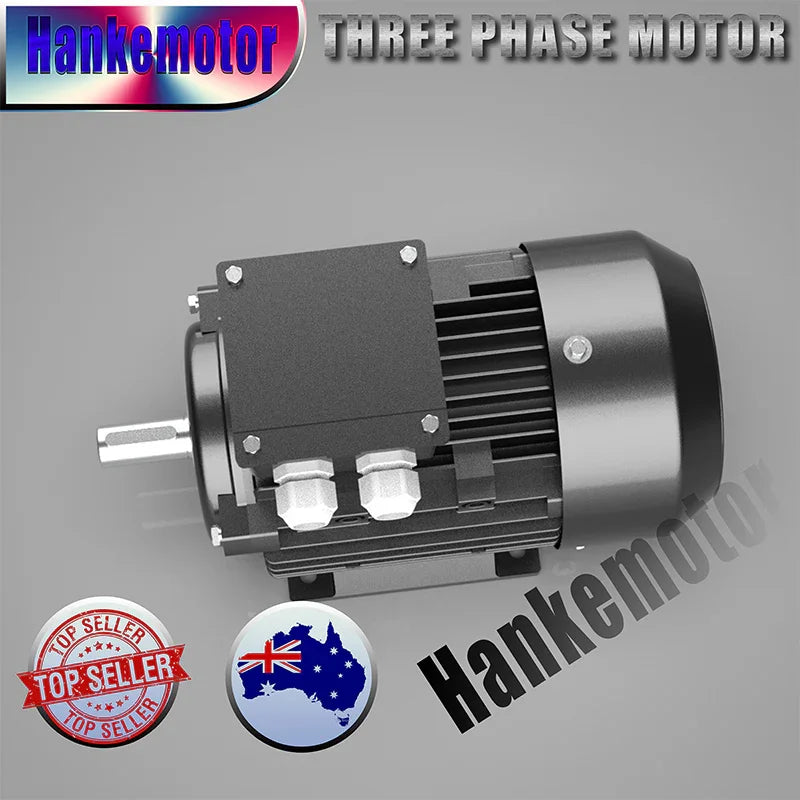
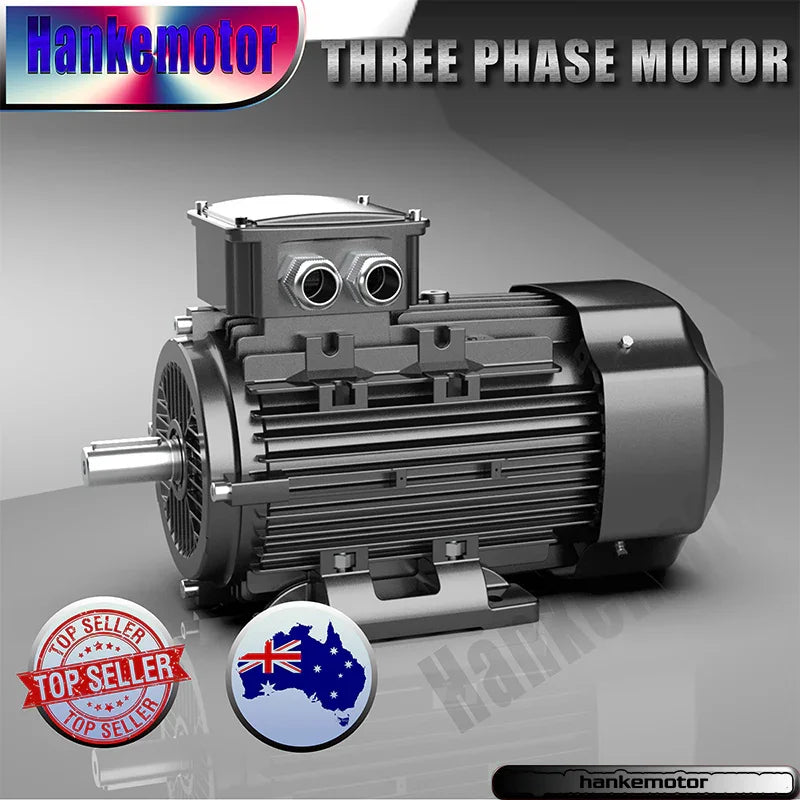
HankeMotor stocks 415V three phase motors from 0.18kW to 55kW for pumps, compressors, fans, conveyors and industrial machinery, in 2-pole (2850rpm), 4-pole (1400rpm) and 6-pole (950rpm) speeds. IEC metric frame, dual voltage 240V/415V. Glen Waverley stock, ships Australia-wide.

Filter1 - 12 of 67 results
Sort by Best selling
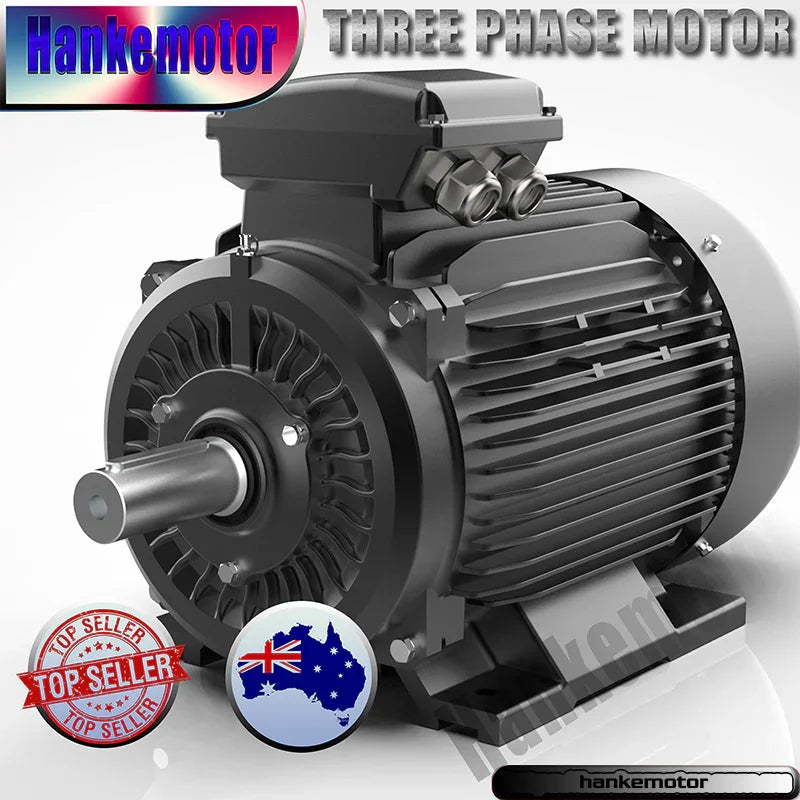
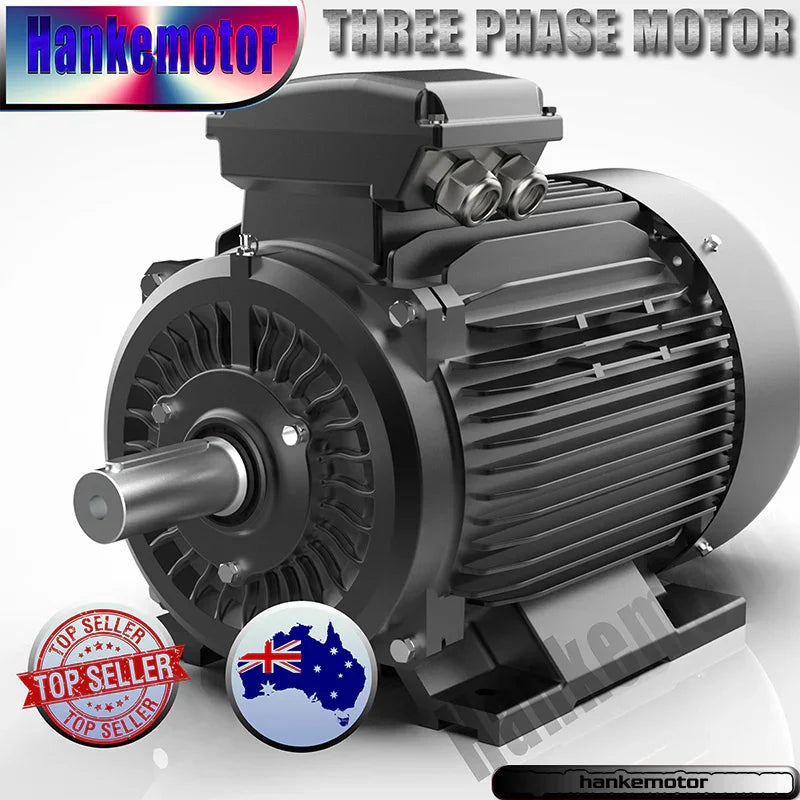
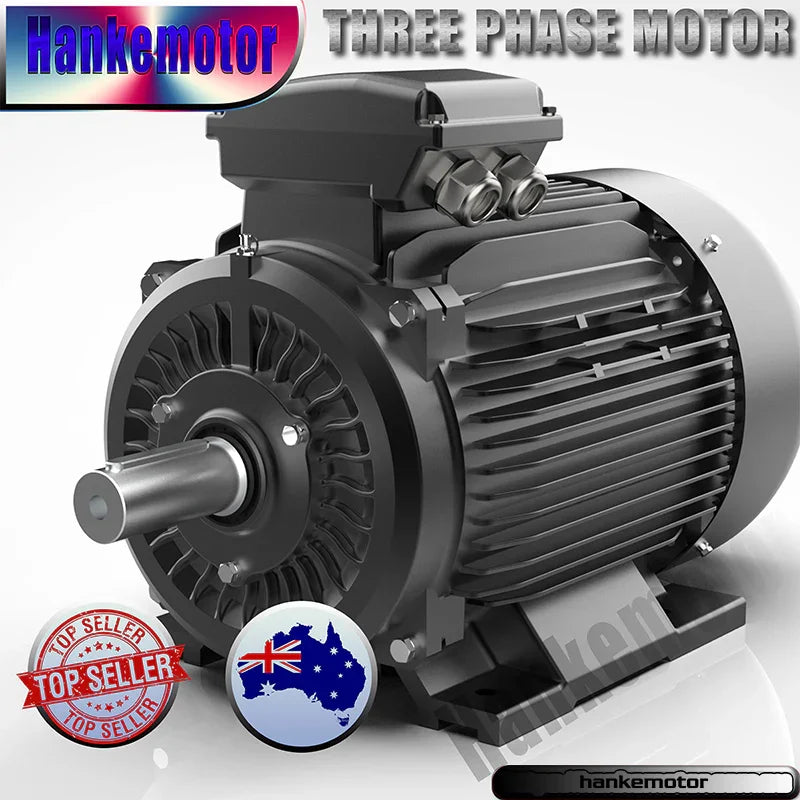
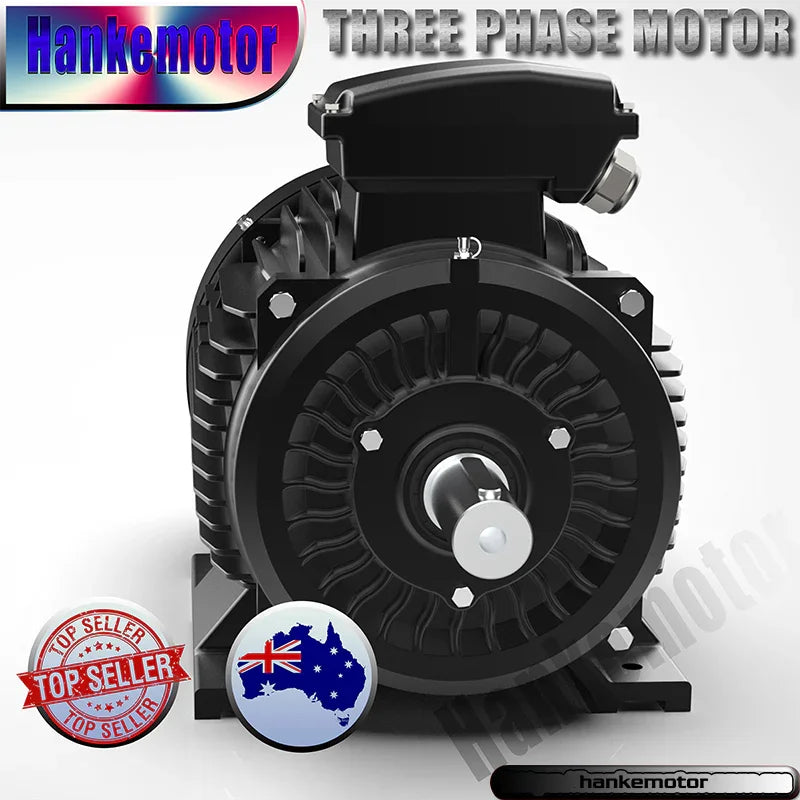
Three phase motors 0.18kW to 55kW. IEC frame, dual voltage 240V/415V (Y/△ configurable). 2-pole (~2,850rpm) to 6-pole (~950rpm). TEFC IP55, Class F insulation. VSD/VFD compatible. In stock Glen Waverley. From AU$119.50. Ships Australia-wide.

A three phase 415V electric motor uses a three-phase power supply to drive equipment that needs smoother torque delivery, higher efficiency and continuous-duty reliability than a single-phase motor can provide — the standard choice for compressors, conveyors, pumps and fans running for extended periods in Australian workshops and industrial sites. HankeMotor stocks three phase motors from 0.18kW to 55kW, in IEC metric frames with dual-voltage windings (240V delta / 415V star), covering 2-pole (~2,850rpm), 4-pole (~1,400rpm) and 6-pole (~950rpm) speeds. All motors are TEFC (Totally Enclosed Fan Cooled), IP55 rated, Class F insulated, and VSD/VFD compatible. Prices start from AU$119.50, with same-day or next-day dispatch from our Glen Waverley, Victoria warehouse.

Three Phase Motor Selection Guide — Power, Speed, and Frame

All motors in this range are IEC-frame, TEFC (Totally Enclosed Fan Cooled), IP55 — the standard specification for Australian industrial and commercial use. Dual voltage winding (Y for 415V, △ for 240V three-phase) means the same motor works on a standard 415V three-phase supply or a single-phase 240V VFD output after rewiring the terminal box.

2-pole
~2,850rpm · 0.25–55kW
Fans, centrifugal pumps, high-speed grinders, compressors
4-pole
~1,400rpm · 0.18–55kW
Air compressors, conveyors, lathes, mixers — most common
6-pole
~950rpm · 0.55–37kW
Agitators, slow-speed pumps, wood chippers

Actual no-load speed varies slightly by motor design. Slip at full load is typically 3–5%, so a 4-pole motor at full load runs approximately 1,350–1,380rpm.

Sizing Your Circuit — Get the Exact Figures Before You Wire

A three-phase motor draws meaningfully less current than a single-phase motor at the same power output, but the exact full-load current, breaker size and cable size depend on the specific motor's nameplate rating and your installation conditions (cable run length, ambient temperature, conduit fill).
Always take the full-load current (FLC) from the motor nameplate or product spec sheet, and have a licensed electrician size and install the circuit per AS/NZS 3000. Call us on 0401 634 280 if you'd like the nameplate FLC for a specific model before ordering.

Running a Three Phase Motor from Single Phase 240V — Delta Rewiring

All motors in this range have dual-voltage windings. If you need to run a three-phase motor from a single-phase 240V supply (domestic shed, workshop without three-phase), use a single-phase input VFD and rewire the motor terminal box from star (Y) to delta (△):

  • Star (Y) connection: motor receives 415V per winding — correct for direct 415V three-phase supply
  • Delta (△) connection: motor receives 240V per winding — correct when driven by a 240V single-phase VFD output

See our Variable Frequency Drives for compatible single-phase input drives. A replacement motor terminal box provides a clean 6-terminal layout for delta rewiring.

Not the right motor if:
You have single-phase 240V supply only and no VFD: a three-phase motor will not run on a single-phase supply directly — it requires either a three-phase supply or a single-phase VFD.
You need US/Canadian NEMA frame: most motors here are IEC metric frame. For North American equipment, see our NEMA frame motor.
You need single-phase 240V direct: see our single phase motor collection.
Need help selecting a motor? Call 0401 634 280 or email hankemotors@gmail.com
Unit 1, 28 Aristoc Road, Glen Waverley VIC 3150

Three Phase Motor FAQ

What is the difference between a 2-pole and a 4-pole three phase motor?
Pole count determines the motor's synchronous speed. A 2-pole motor runs at approximately 2,850 rpm (50 Hz supply), making it suited to fans, centrifugal pumps, and high-speed equipment. A 4-pole motor runs at approximately 1,400 rpm — the most common choice for air compressors, conveyor drives, lathes, and general industrial machinery. 6-pole (950 rpm) and 8-pole (720 rpm) options are available for slower-speed applications. If in doubt, choose 4-pole.
Can I run a three phase motor from single phase 240V supply?
Yes, but not directly. A single-phase VFD (variable frequency drive) converts single-phase 240V input to three-phase variable output. You also need to rewire the motor terminal box from star (Y) to delta (△) so the motor windings receive 240V per phase instead of 415V. This is the standard setup for Australian workshops without three-phase supply. See our 1.5kW and 3.7kW VFD range for compatible drives.
What does IEC frame mean and how do I match it to my existing motor?
IEC frame is the international metric standard for motor mounting dimensions. The frame number equals the shaft centreline height in millimetres — Frame 90 means the shaft is 90mm above the mounting surface. All IEC motors of the same frame size have identical mounting bolt patterns, shaft diameters, and shaft heights, regardless of brand or kW rating (within the same pole count). Check your existing motor nameplate for the frame number (e.g., "90S", "112M", "132L") to find a direct bolt-in replacement.
Are these motors compatible with a variable speed drive (VFD/VSD)?
Yes. All motors in this range are TEFC Class F wound and VSD compatible. For operation at speeds below 30 Hz for extended periods, derate the load to 70–80% of nameplate rating — the built-in cooling fan runs slower at low speed, reducing cooling efficiency. For continuous low-speed duty below 25 Hz, consider a motor with separately powered ventilation. At normal operating speeds (25–50 Hz), no derating is needed.
What is Class F insulation and why does it matter?
Class F insulation is rated to a maximum winding temperature of 155°C. All motors in this range use Class F windings but are rated to Class B temperature rise (80°C over ambient), giving a 25°C thermal margin. This margin extends motor life in high-ambient environments (foundries, compressor rooms, outdoor summer conditions) and makes Class F motors more tolerant of brief overloads without winding damage.
Do you stock motors for air compressors and how do I select the right one?
Yes. For direct-on-line (DOL) compressor starts, use the 4-pole model at your required kW. Compressor motors have high starting torque demand — ensure your motor starter or VFD is rated for heavy-duty (HD) starting. For piston compressors: match motor kW to pump plate rating. For screw compressors: pair with a VFD for soft-start and variable speed. Common sizes: 2.2kW for 20-30L/min small compressors; 3kW–5.5kW for workshop 50-100L/min units; 7.5kW+ for industrial compressors above 150L/min.